

Bicycle seismographs
Workshop and exhibition | 2016
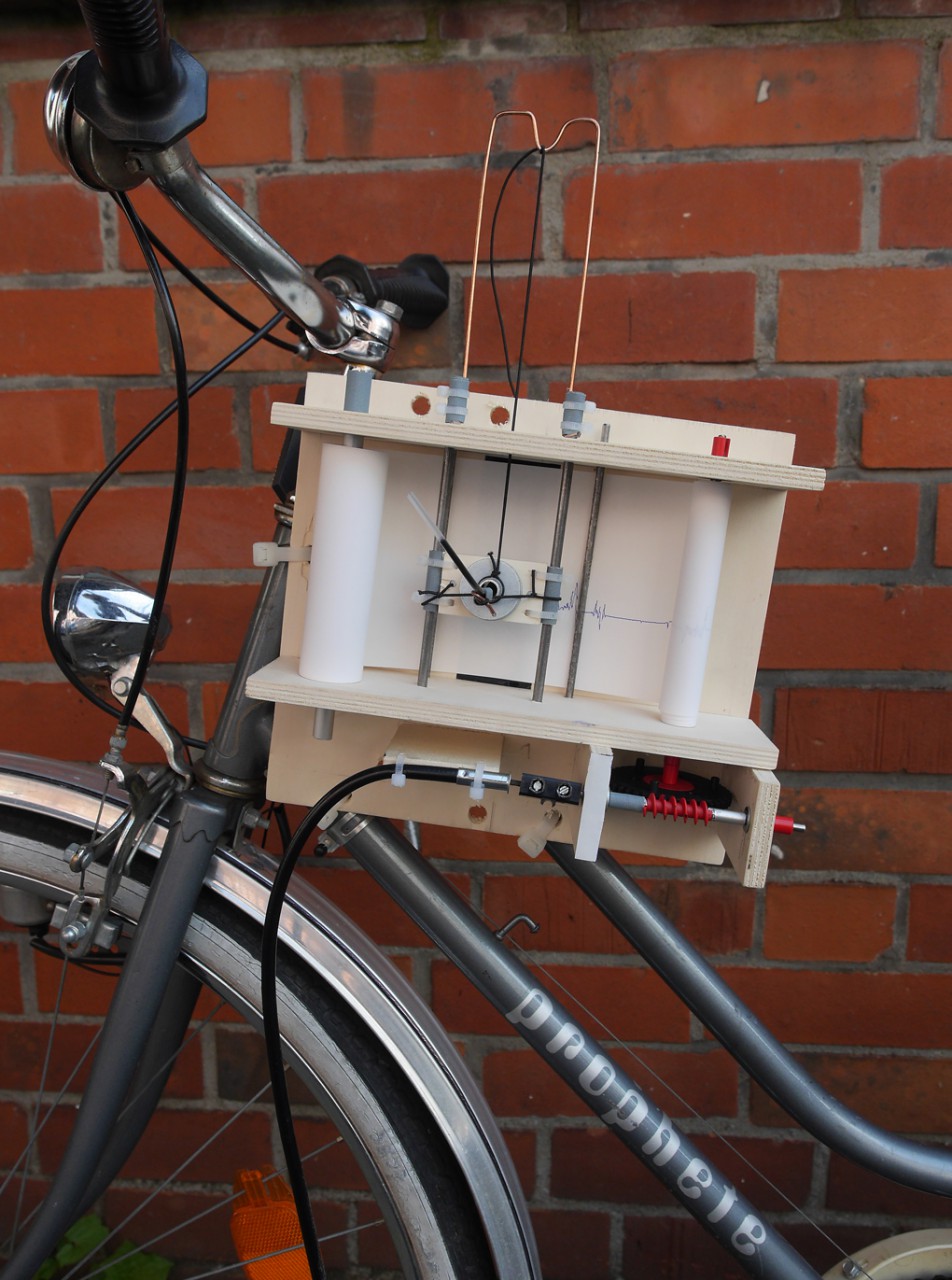
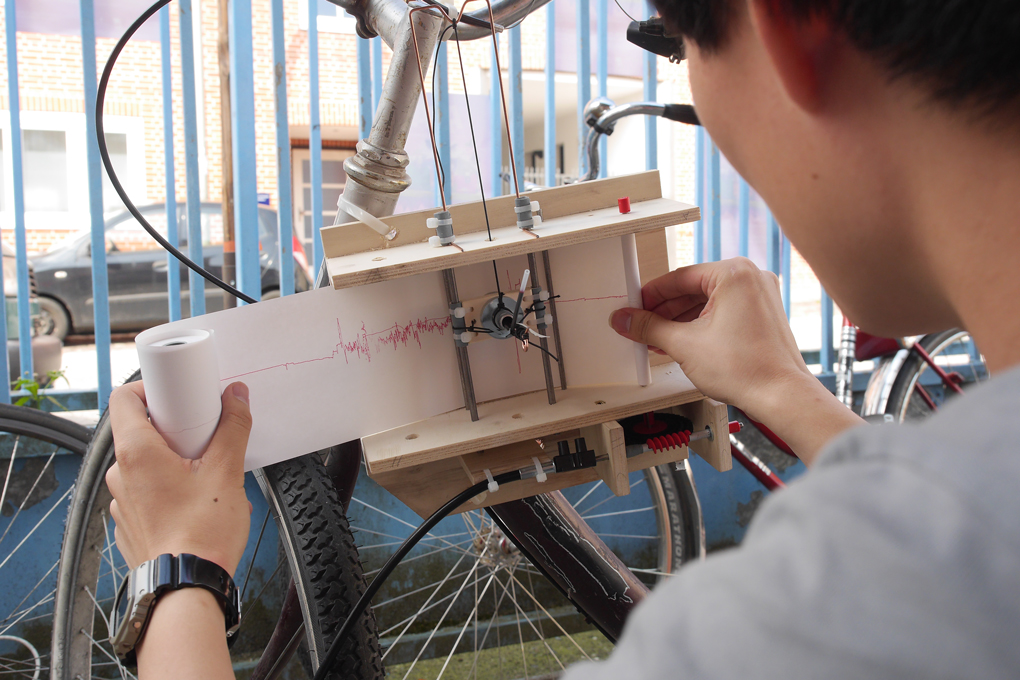
I have an old, Dutch bicycle, an omafiets, as they say in the Netherlands. When I lived in Amsterdam, riding this kind of bike on the smooth bike lanes was a pleasure. However, as I later moved to Berlin, I soon realized that the roads were of unpleasantly uneven nature. Sometimes parts would literally fall off my bike as I clattered over cobblestone and cracked asphalt. The idea for a bicycle seismograph, that is, a mechanical drawing machine, which records the bumpiness of the ride on a small paper roll, was born from these shaky experiences. In summer 2016 came the opportunity to turn this idea into reality in a form of a workshop called Data bicycles at the A/D/A festival, which approached smart cities and citizen utopias with a twist.
Seismograph production
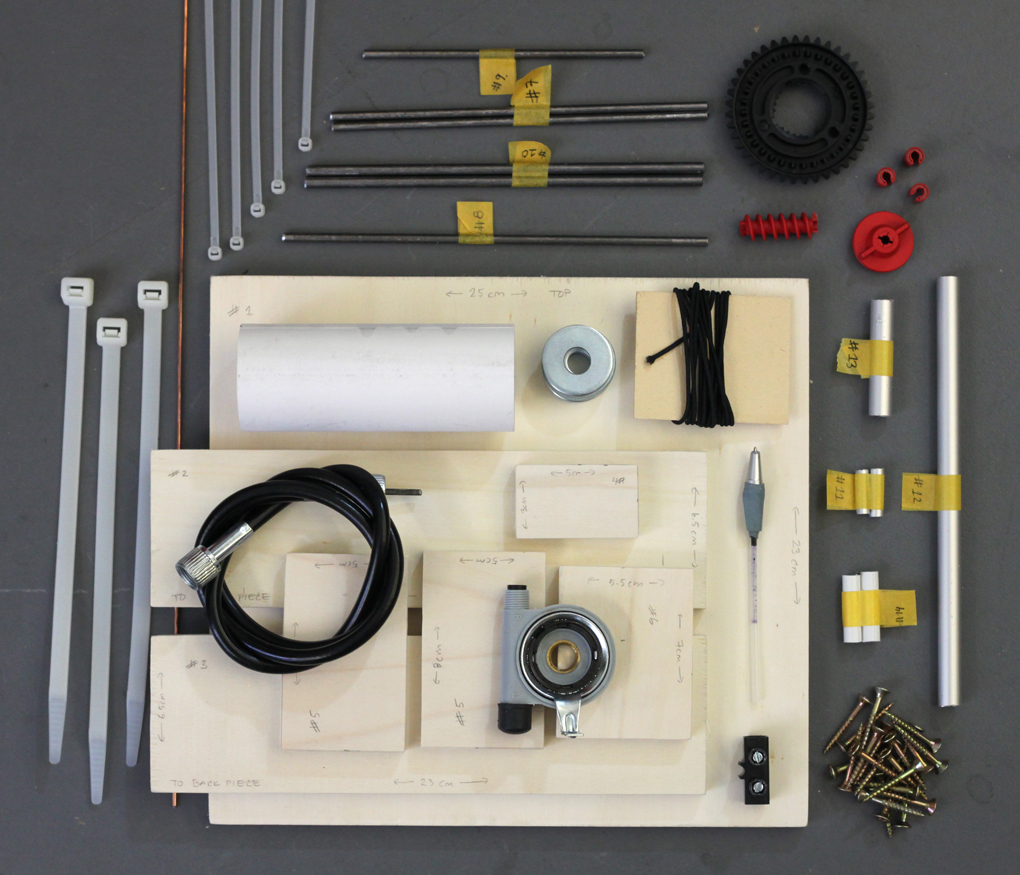
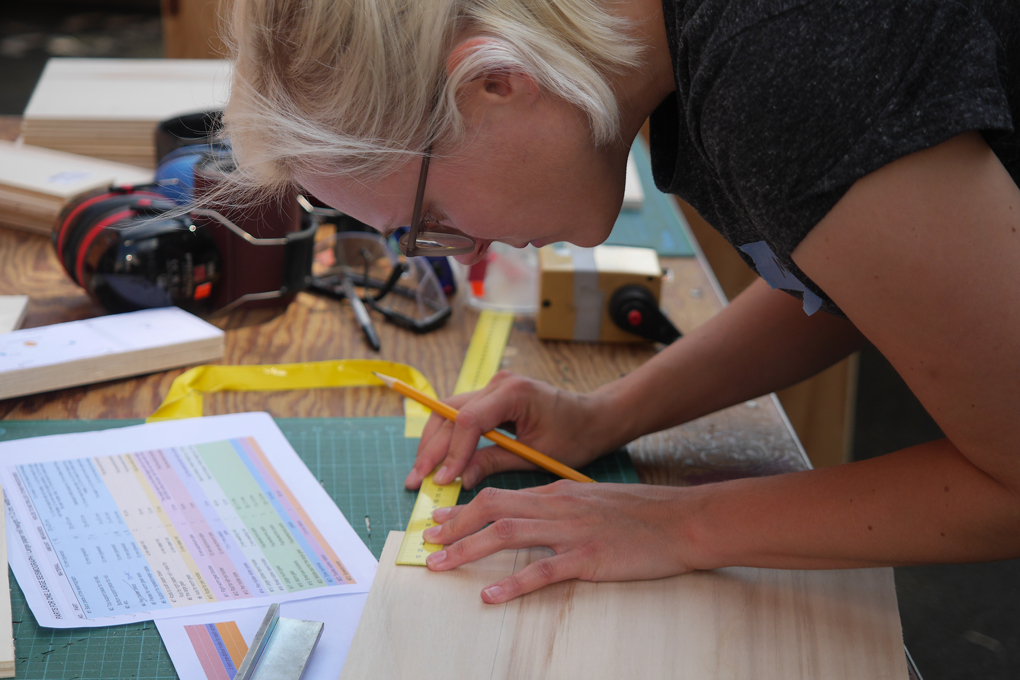
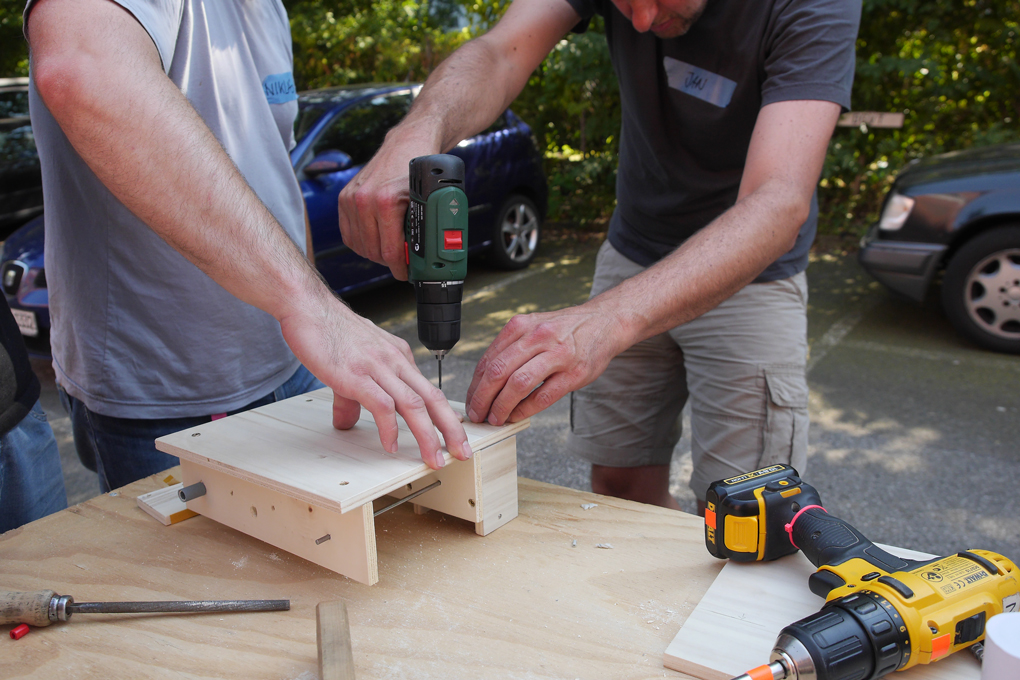
We started the workshop at the Fab Lab Fabulous St. Pauli by looking into example seismographs, which I had built beforehand. After this we divided in teams and started a factory line in order to produce all the parts that were needed for six seismographs. The parts were made from hardware store materials and included wooden parts as well as rod and pipes of different lengths, both of which needed to be measured and cut with care. With well organized and enthusiastic teamwork the factory line soon advanced to the point, where we could start assembling the seismographs.
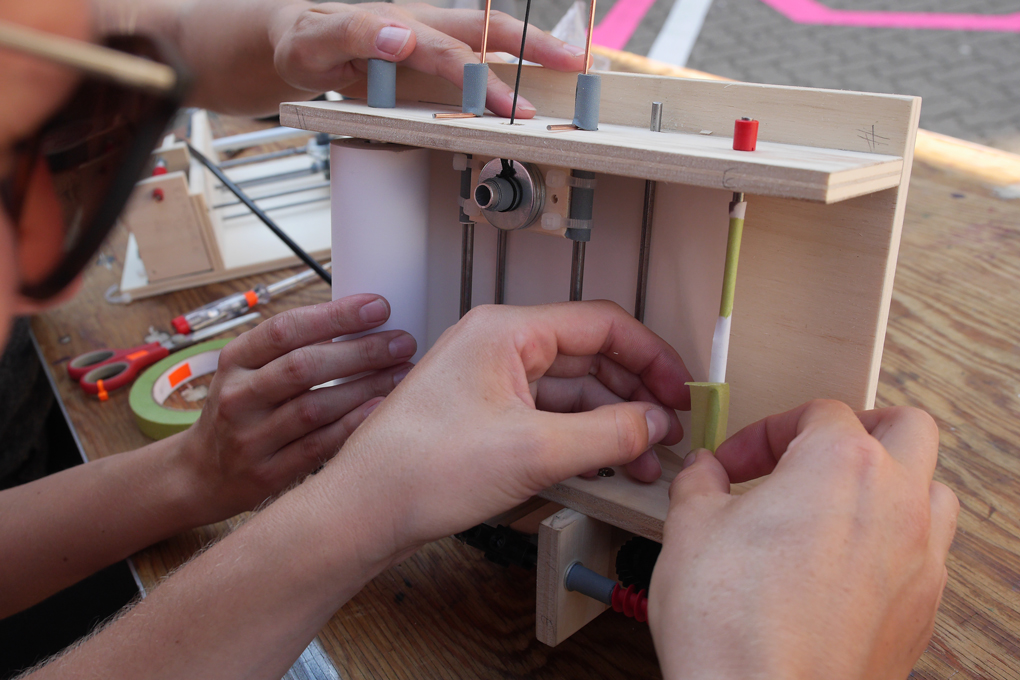
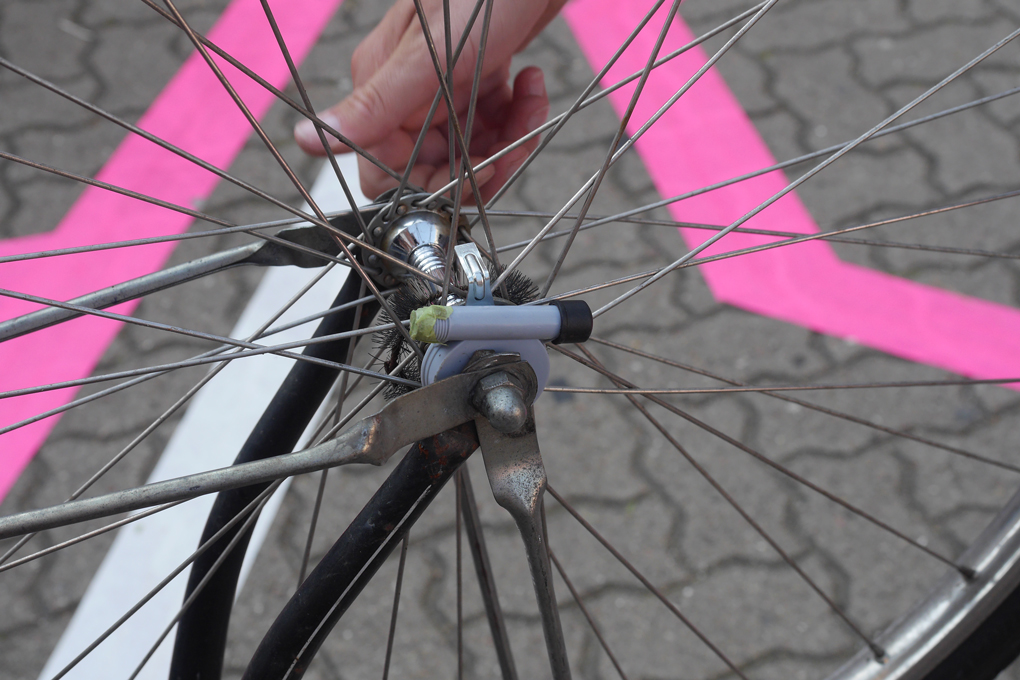
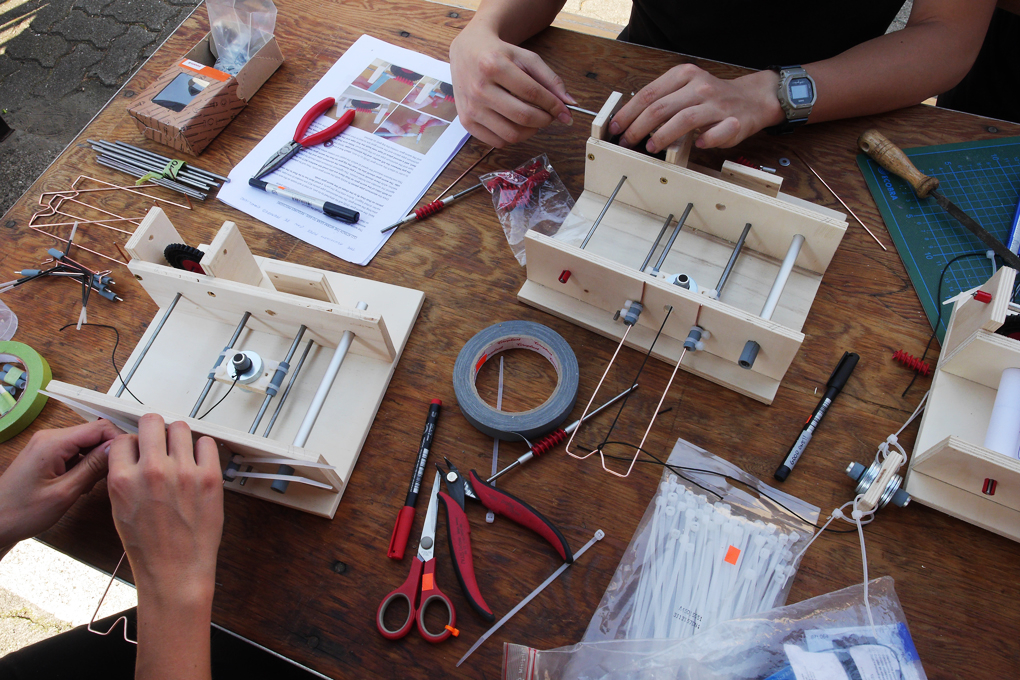
Two parts required special attention as we were finalizing the seismographs. Firstly, the paper roll in the seismograph rotates as one pedals. This is based on re-purposed parts from an old school mechanical speedometer, which is attached to the hub of the front wheel. Making the connection to the wheel needed to be smooth and secure, and as bicycles vary, some adjustments needed to be also made to the speedometer parts. Secondly, the speedometer cable, which transfers the movement of the front wheel to the seismograph, was attached to the seismograph's reduction gear mechanism made of Fischertechnik parts. Again, we had to ensure that the gears were rotating flawlessly together. In the end of the day all the seismographs were working well. Few people even participated in Critical Mass the same night, so the seismographs went right away through some endurance testing.
Collecting data
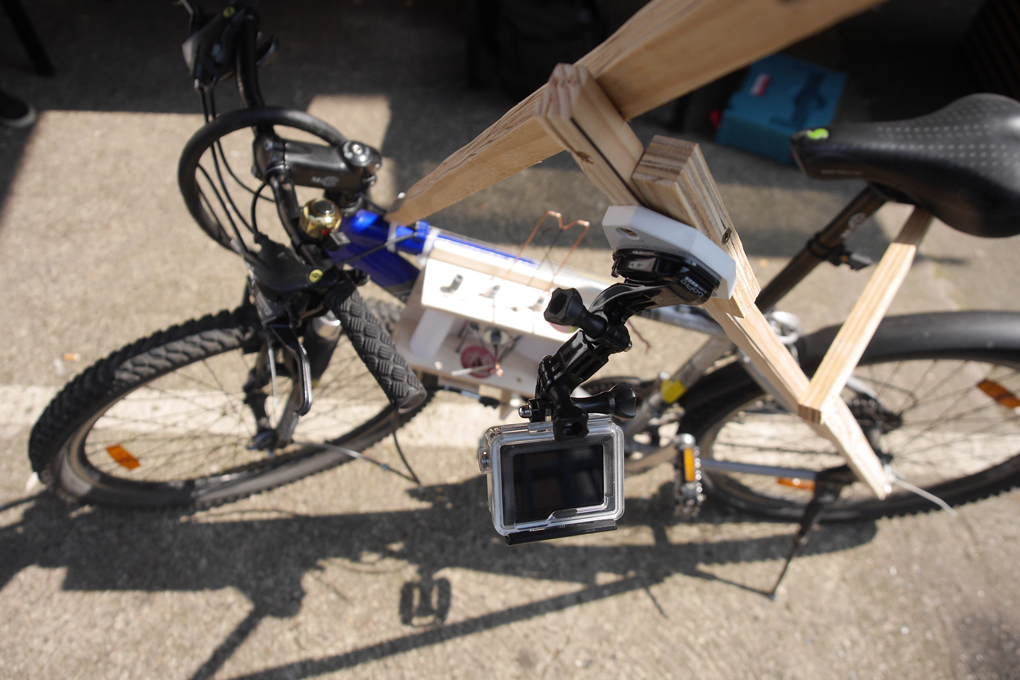
On the second day of the workshop, we made data gathering tours with the seismograph-bikes in order to reveal the micro-topography of Hamburg. The participants adopted different approaches. Three people went for a data gathering tour, which included marking the route on a map and corresponding data points on the seismograph paper roll. They also made additional road surface recordings by taking photos and making frottage art. Meanwhile, one participant stayed at the Fab Lab yard and drove systematically over obstacles of different height, and another participant modified his seismograph to move whimsically in all directions (not just up and down). Niklas, who was helping out with the workshop, was also inventing GoPro mounts for making video documentation of the seismographs. In the end we all made a team tour together, admiring the harbour of Hamburg and eating ice cream.

Presentations
After the workshop, the seismograph design and collected data were presented at the A/D/A festival exhibition. The Bicycle Seismographs have also visited the Edinburg Festival of Cycling in 2017. Additionally, the short project video has also been shown at the Filmed By Bike festival (2017) in the US and at the City Mojo Film Festival (2017) in Perth, Australia. It was also part of the 13th International Cycling Film Festival (2018/19) selection.
See also:
Thank you!
Many thanks to the A/D/A festival organizers Alexandra, Jeanne and Axel as well as the other invited artists for the great festival. Big thanks also for Niklas Roy for his inventive help with the workshop and for the most cheerful, enthusiastic and fun workshop participants Jan, Mira, Carina, Luke, Yan, Marie and Knut.