

Downsampling Masterpieces
Workshop | 2014
The Downsampling Masterpieces Workshop was organized as a part of Redesign Your Cultural Heritage session at the Mozilla Festival in London in 2014, which was one of the activities of the Europeana Creative project. The session belonged the Art and Culture of the Web track and explored how open cultural content can be used in creative ways.
Images and sounds
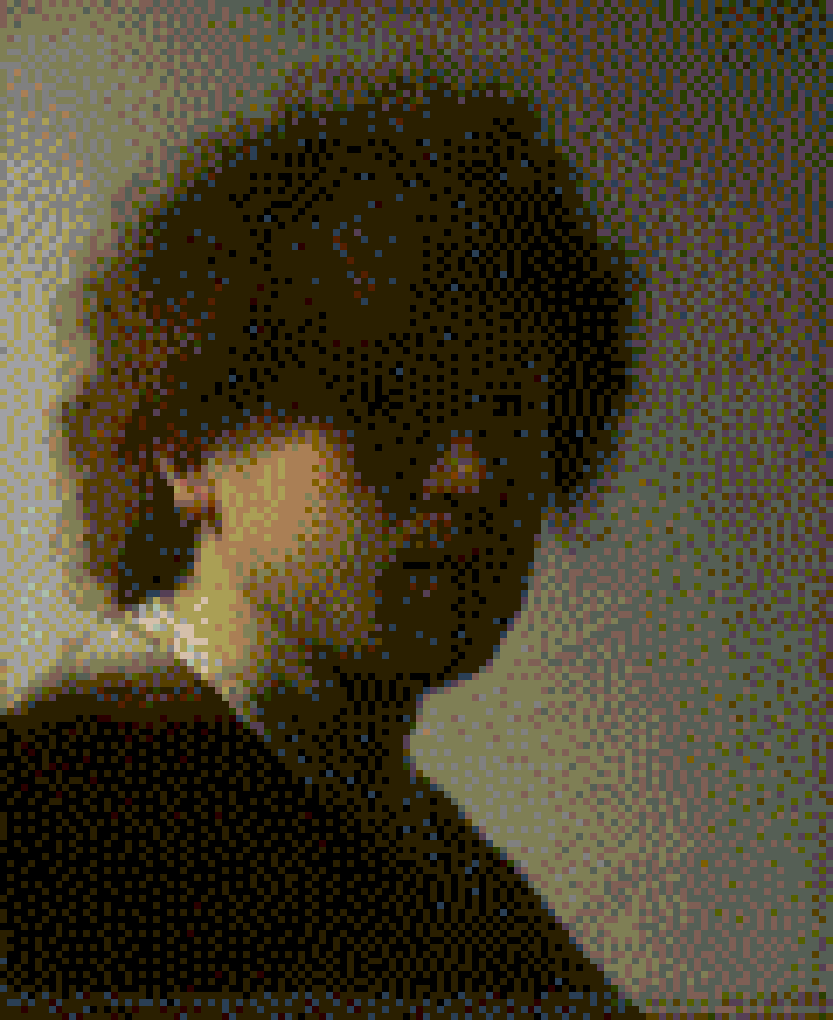
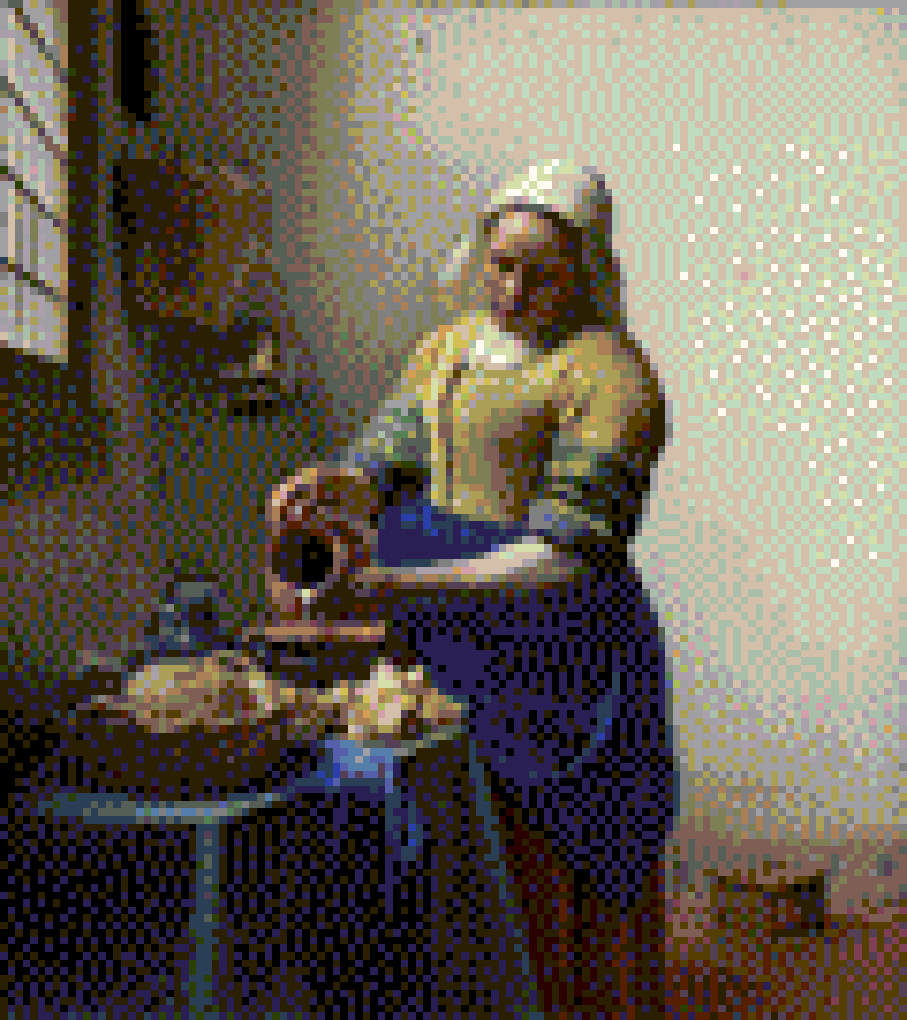
High-resolution images are often unavailable for free reuse due to copyright reasons. Even for works that belong to the public domain, such as old paintings, only low-resolution digital copies might be available. To address these issues in the context of open cultural content, the workshop examined expressive opportunities at low resolutions. Embracing the 8-bit aesthetic and DIY electronics, we made melody cards using downsampled masterpieces in painting and music, which were accessible via the Europeana portal. Firstly, we used public domain images of famous paintings from the Rijksmuseum. The museum has been a forerunner in providing their collections for creative re-use. Secondly, we used public domain recordings of famous music pieces provided by Sound & Vision. Unfortunately the old links to the sound files have stopped working, but please see the old Instructable for music piece details.
Making the cards
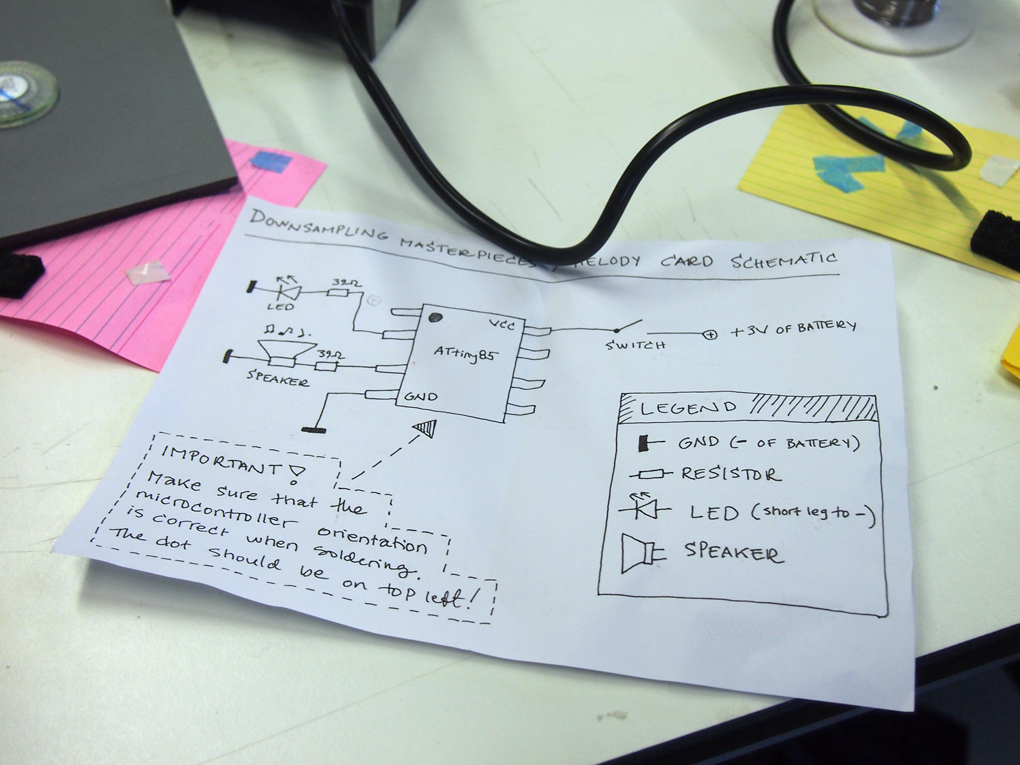
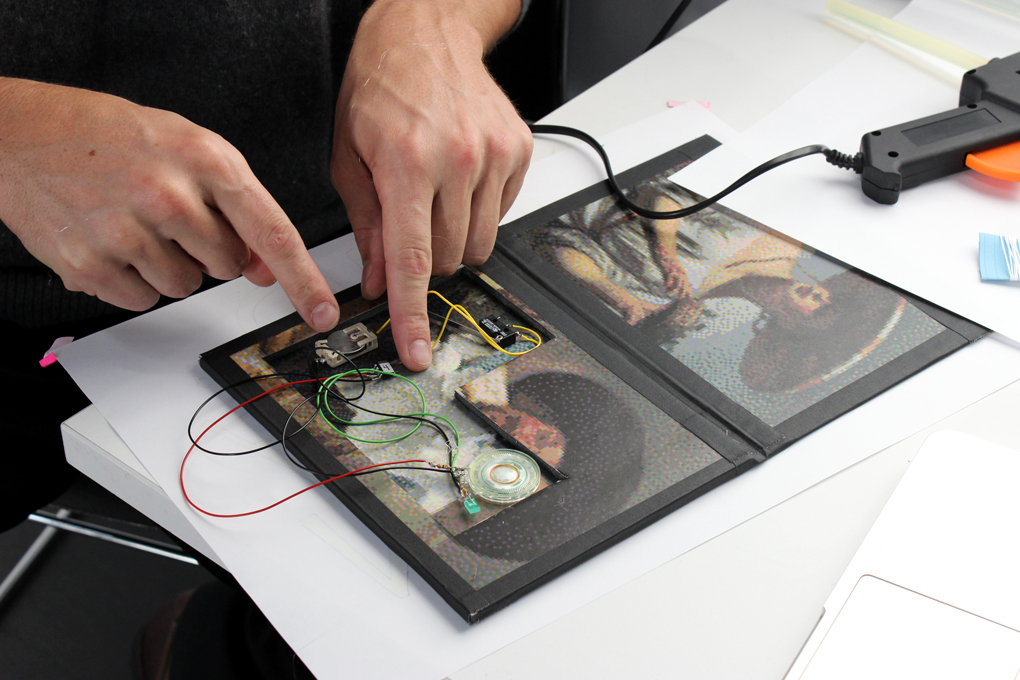
In the beginning of the workshop everyone got an electronics kit, which included an ATtiny85 microcontroller, a small speaker, a battery, a LED, a switch and resistors. Each of the microcontrollers contained a different surprise melody, which was based on one of the famous music pieces, such as Beethoven's Symphony No. 9. The melodies were created by first converting the original mp3 recordings first into MIDI using Ableton live. After this the MIDI file was converted into Arduino code with an online tool (please see here too the Instructable for details). They were truly surprise melodies in the sense that there was not much resemblance with the original piece in the end of the conversion process.
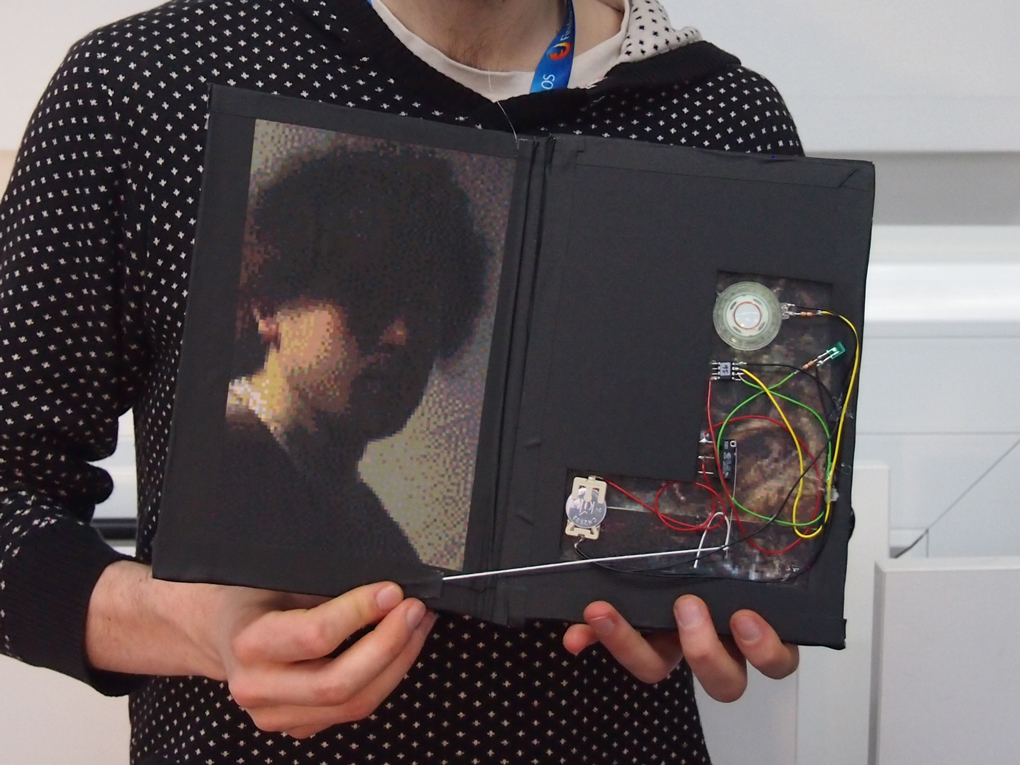
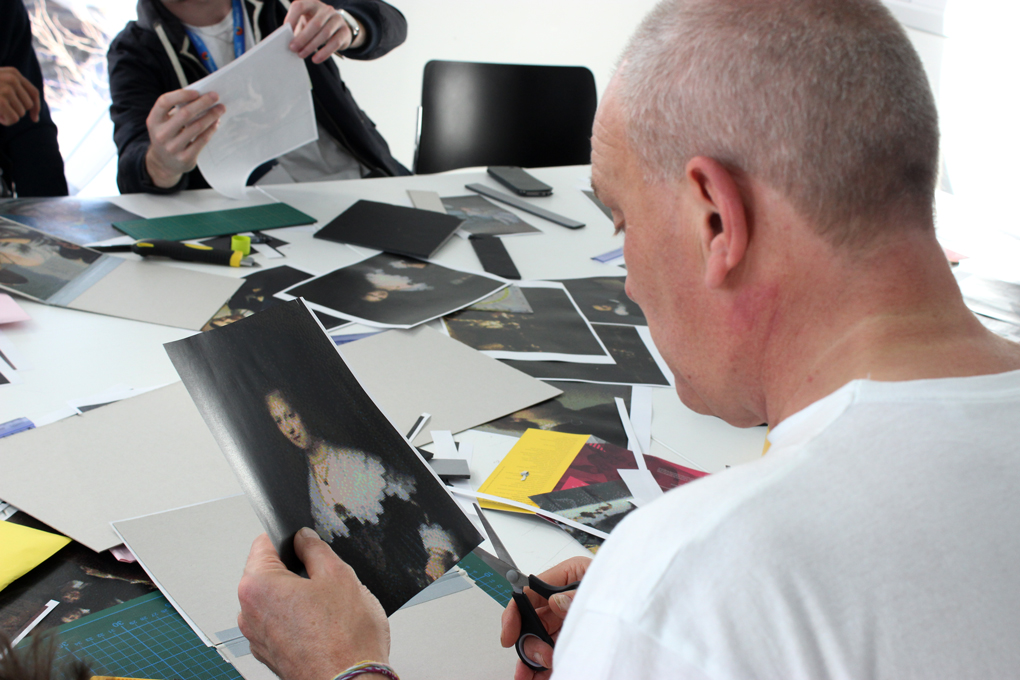
In order to hear their melody, the participants had to solder a functioning circuit. The electronics were then hot glued on the card itself, which was made from cardboard, foamboard and prints of downsampled public domain masterpiece paintings. The low resolution images of the famous painting were generated beforehand by pixelating them to the level that they looked like retro computer graphics. The last touch to the melody card was the switching mechanism that played the melody when opening the card.
See also:
Thank you!
Special thanks to Niklas and my colleagues Sanna, Neea, Christina and James for help, as well as to the hardworking participants and the friendly Mozilla Festival organizers.