

Cyberbeetle
Electromechanical beetle | 2014
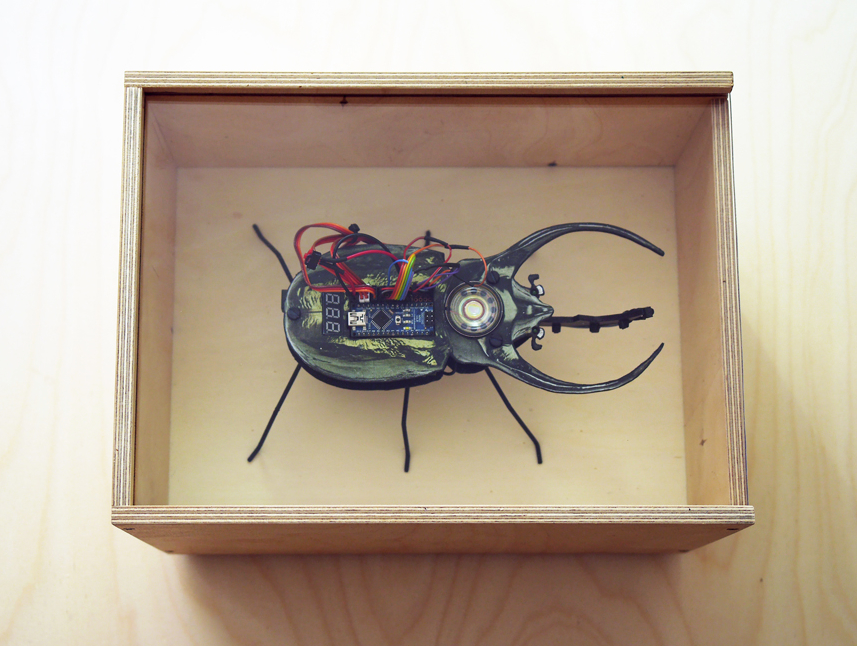
Cyberbeetle was done as a part of the Coding da Vinci open culture hackathon organized in Berlin in 2014. The hackathon invited designers, educators, programmers, artists and anyone interested to find creative re-uses for open cultural datasets. Cyberbeetle is a robotic beetle, which combines in a playful way openly licensed biology related pictures and sounds from the Museum für Naturkunde Berlin and Botanischer Garten & Botanisches Museum Berlin-Dahlem. He resides in his own insect box, which has some surprise features built in it. Music for Cyberbeetle was made by my brother Tomi Hyyppä.
Making the beetle
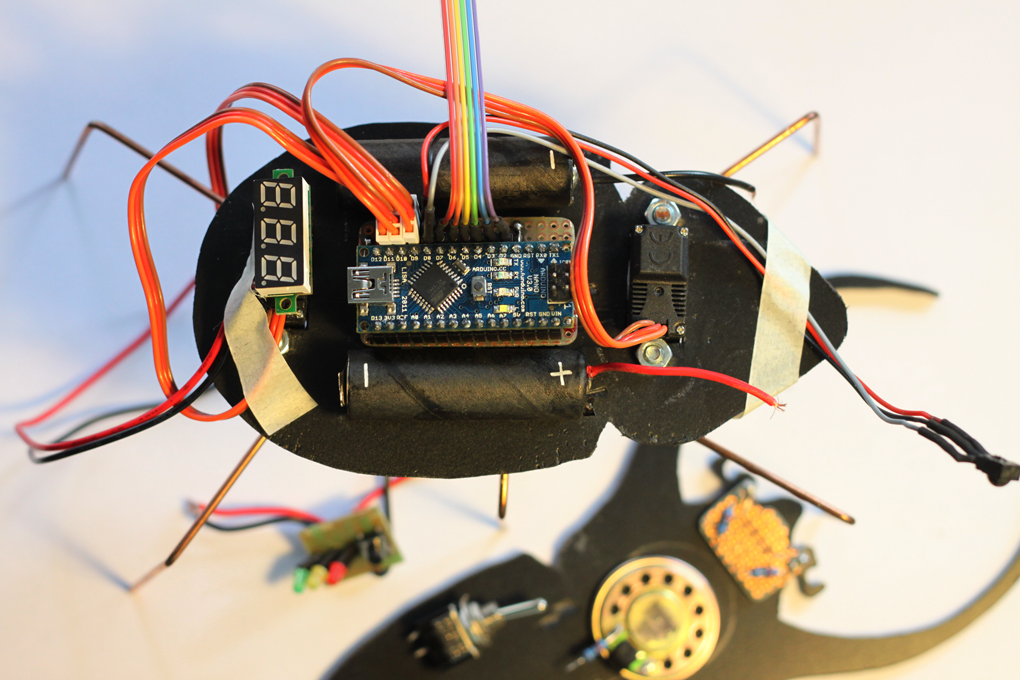
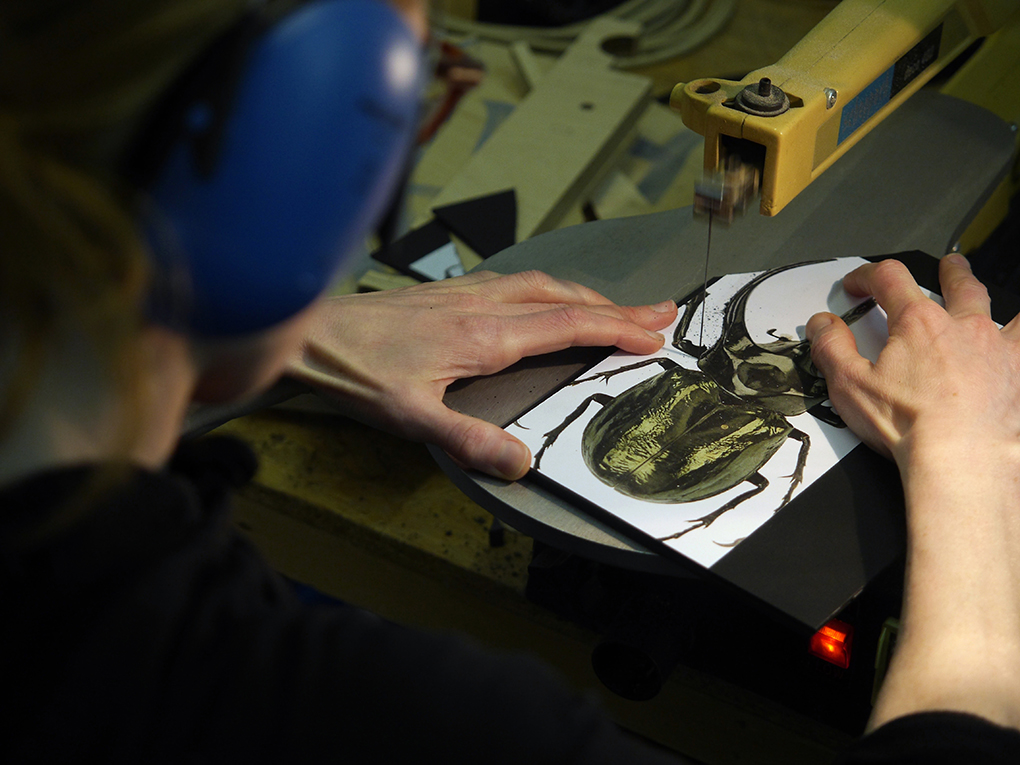
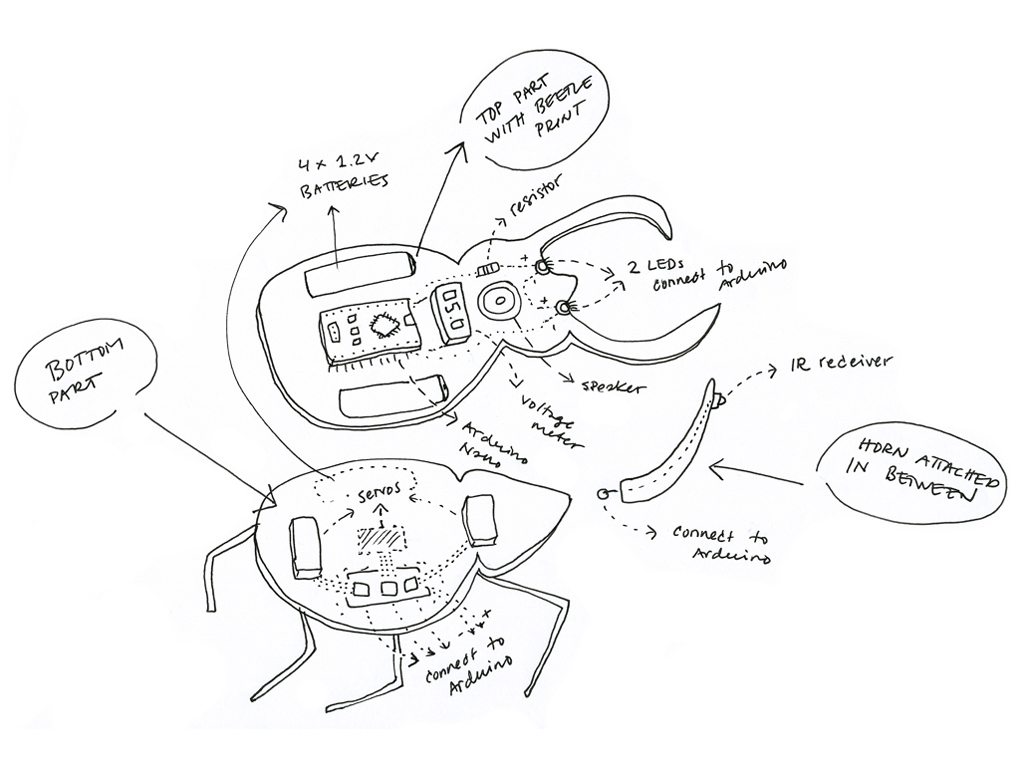
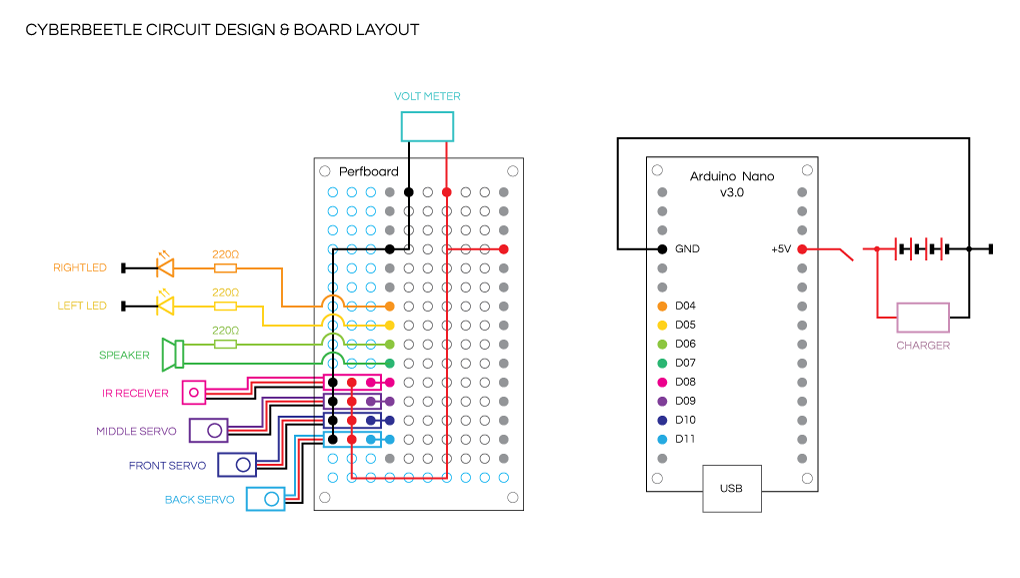
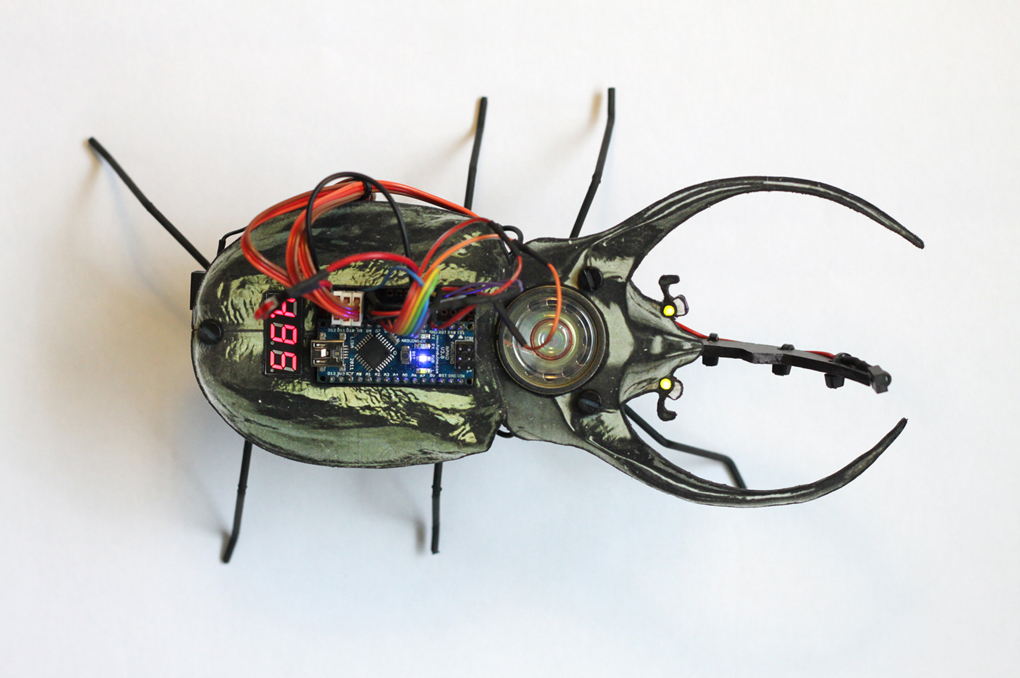
Cyberbeetle is based on a gorgeous Chalcosoma atlas beetle, which I found in the open data set containing high-resolution insect box scans of Berlin's natural history museum's impressive collections. Using an image of the beetle I built a robotic beetle including RC servos and an Arduino microcontroller board. When the beetle is turned on, it slowly crawls forward, while its eyes glow and it makes crackling sounds. Cyberbeetle is powered by chargeable batteries from an old mini cordless drill.
Insect box
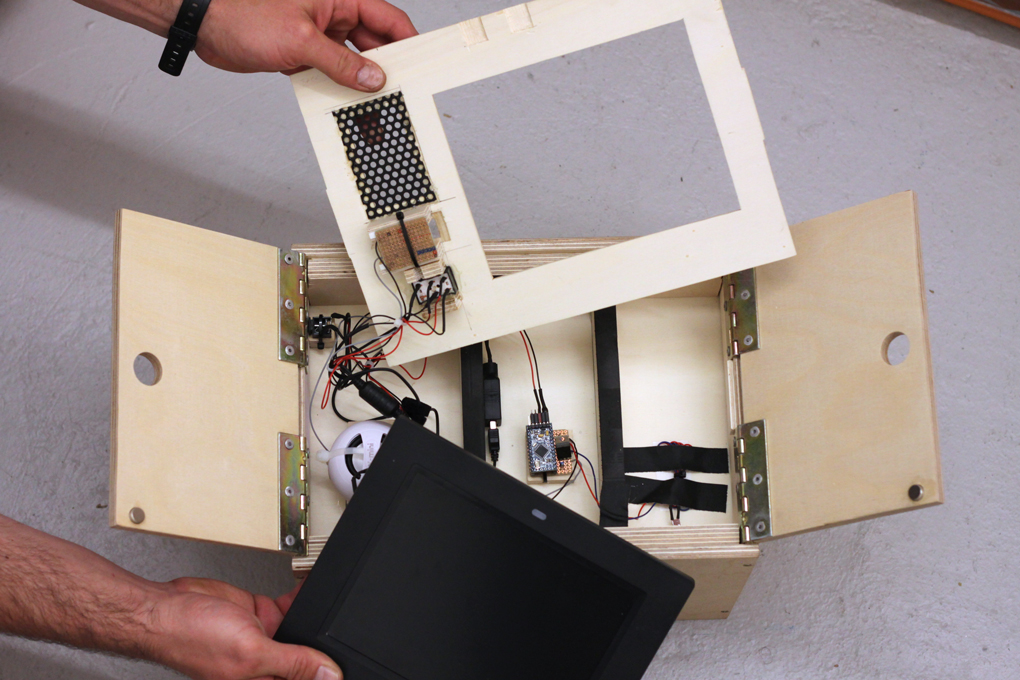
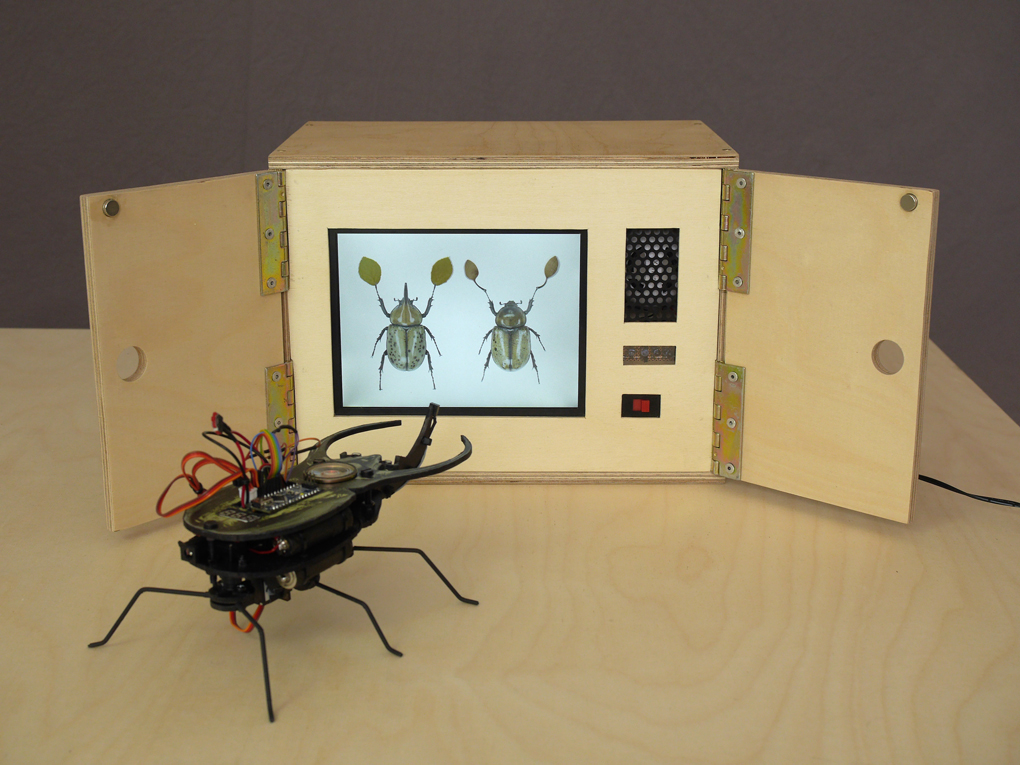
Cyberbeetle also has his own hi-tech insect box with special features. Opening doors in the bottom of the box unveils a miniature home theater system including a screen made of a digital photo frame and a speaker for sound. The horn of the Cyberbeetle contains an infrared receiver, which causes him to react when the “TV program” starts. As a program we created a music video to which the robotic beetle starts to dance. I animated insect and plant pictures cut out from archival images of Berlin's botanical garden and my brother Tomi made the audio using animal sounds from the Tierstimmenarchiv. Although not immediately evident, all the sounds in the song are made from animal sound samples except for the kick drum.
Presentations
The Cyberbeetle received a lot of positive feedback at the final presentations of the hackathon and was awarded the Funniest hack prize. He has also travelled in different events promoting open cultural content and even appeared in the German children's program called Erde an Zukunft in January 2019. I was also partucularly happy that short after the hackathon Museum für Naturkunde, where the original Chalcosoma atlas lies, offered to scan Cyberbeetle to their digital collection.
See also:
Thank you!
Big thanks to Antonin and Thomas for organising this event as well as to all Eniarofers for their supercool games and warm welcome at Les 8 Pillards. Special thanks to Guillaume for the neat little printer and for our excellent cooks for their culinary creations.