

Dress to Prototype Workshop
Workshop | 2015
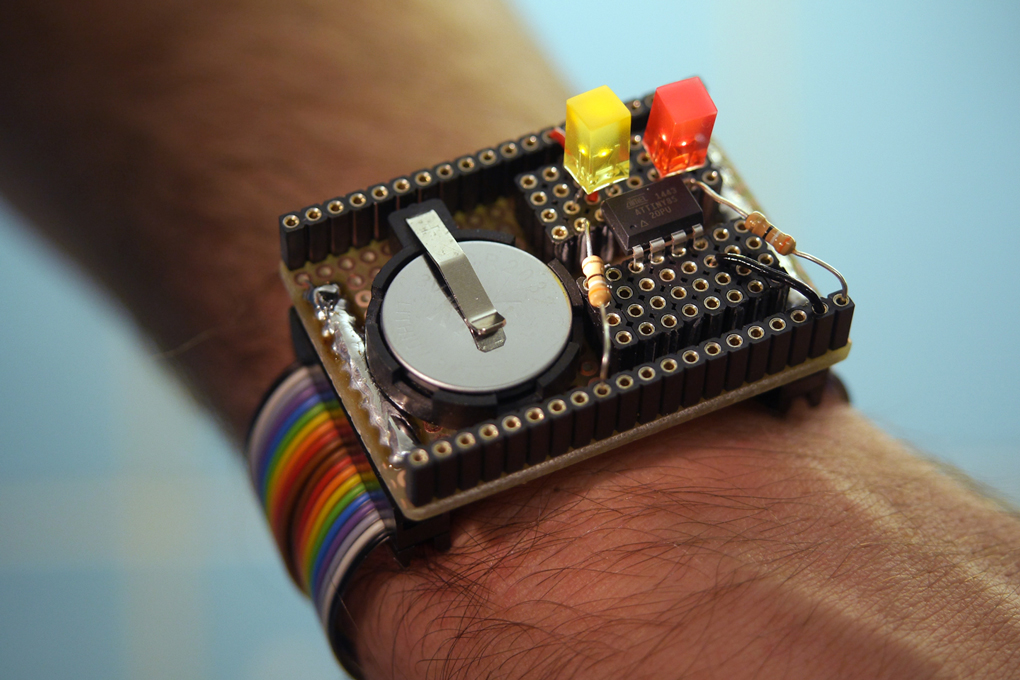
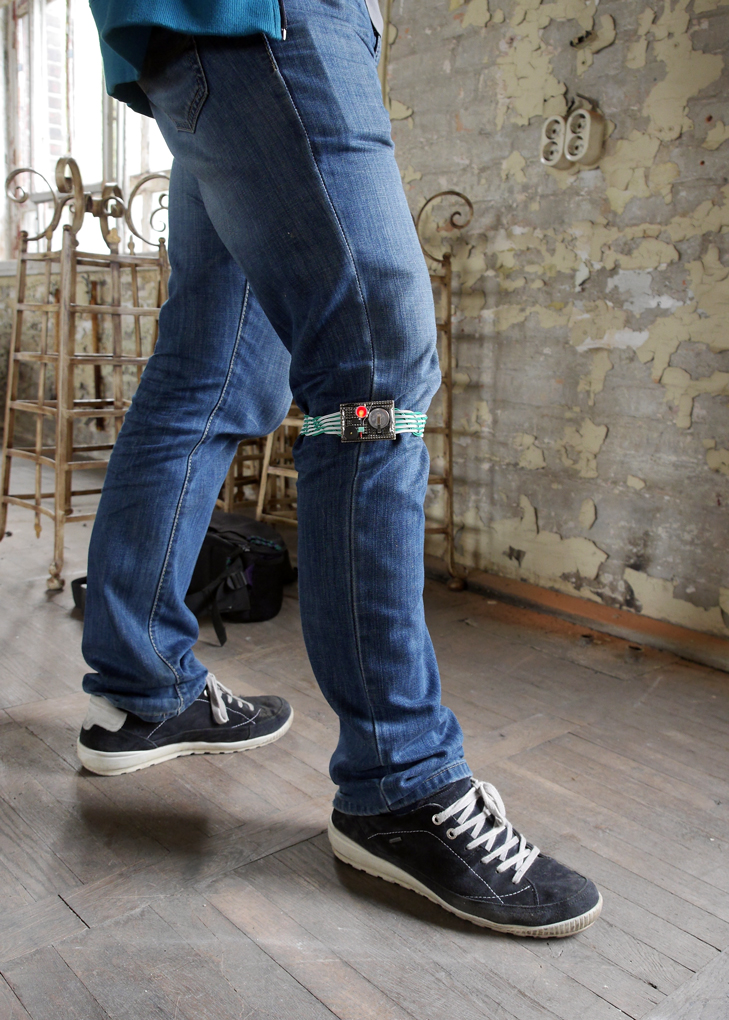
The Dress to Prototype Workshop was organized at the Wear It Festival in Berlin, which focused on wearable technologies. The workshop was inspired by the idea that a wearable technology enthusiast could dress up in her or his own DIY electronics tools, while also appreciating the beauty of electronics components. Therefore, we made small, wearable breadboards, which not only looked cool, but could be used for prototyping and wearing electronic circuits on the go.
Making the breadboards
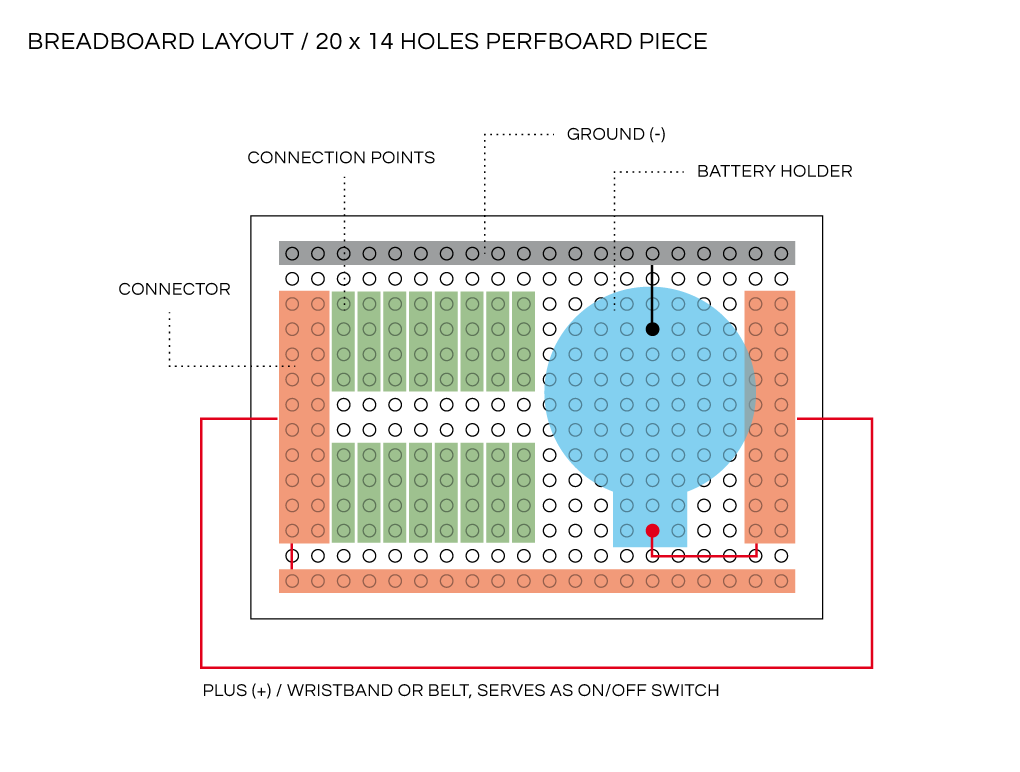
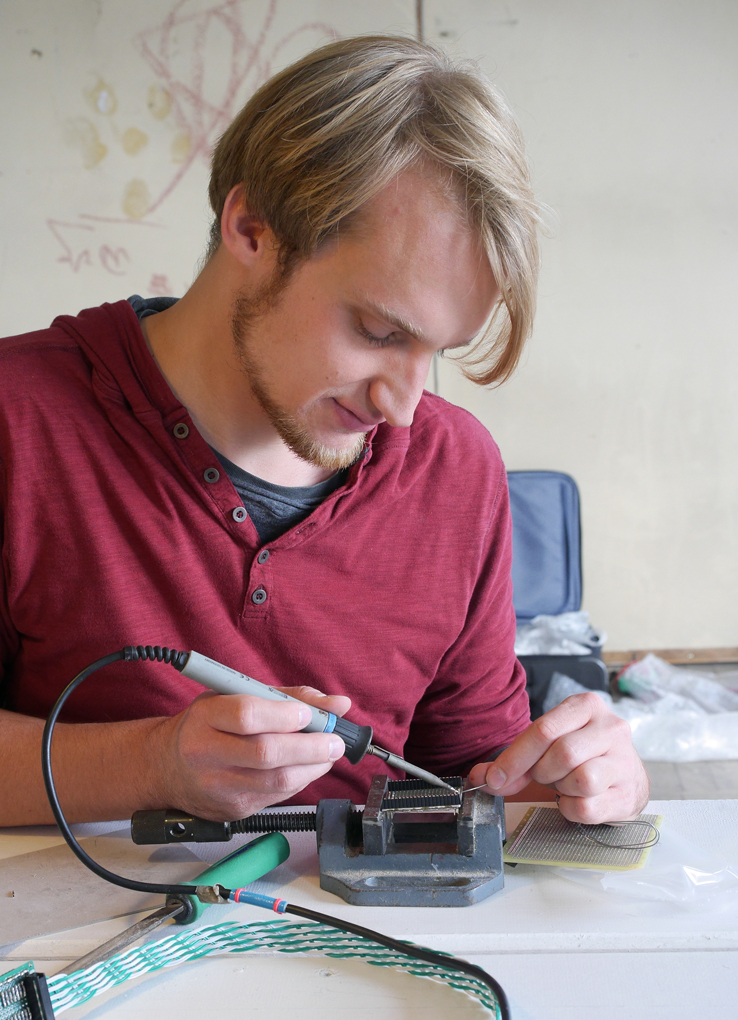
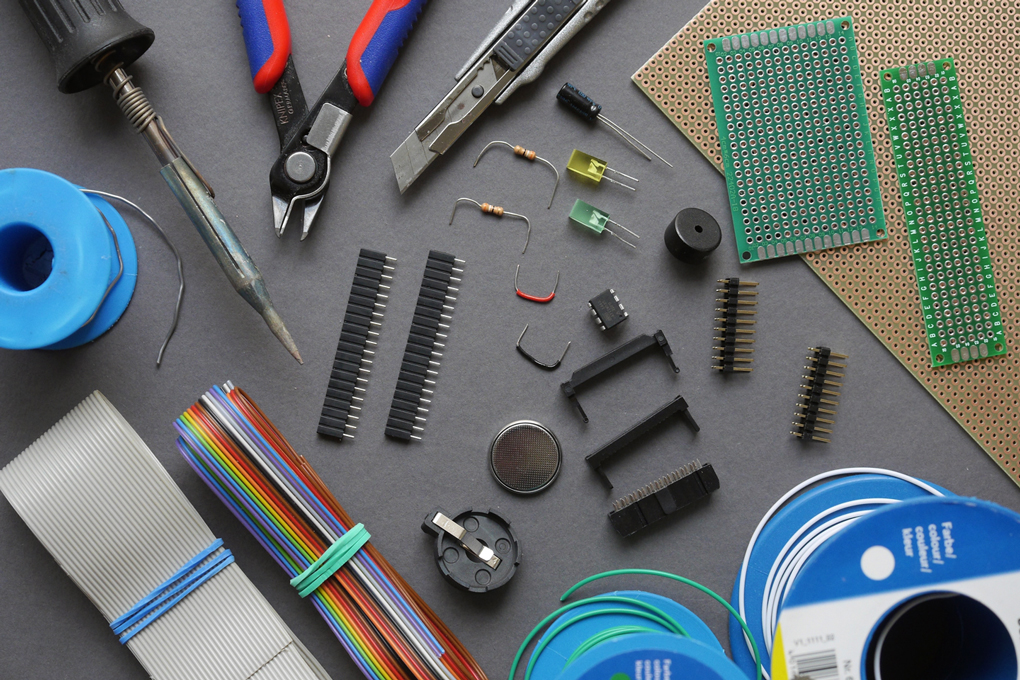
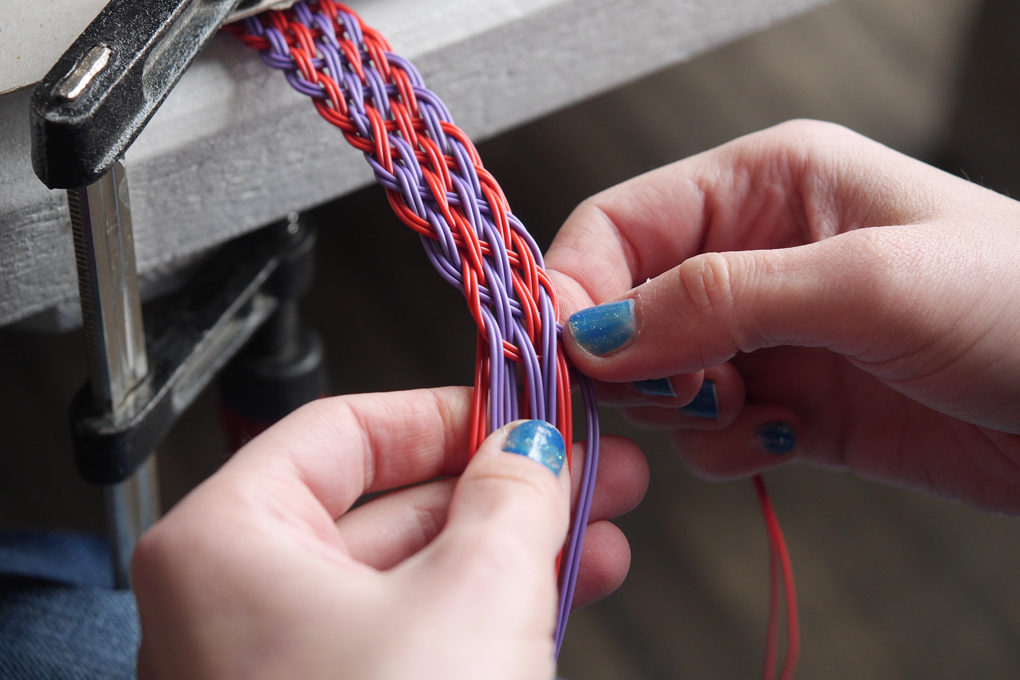
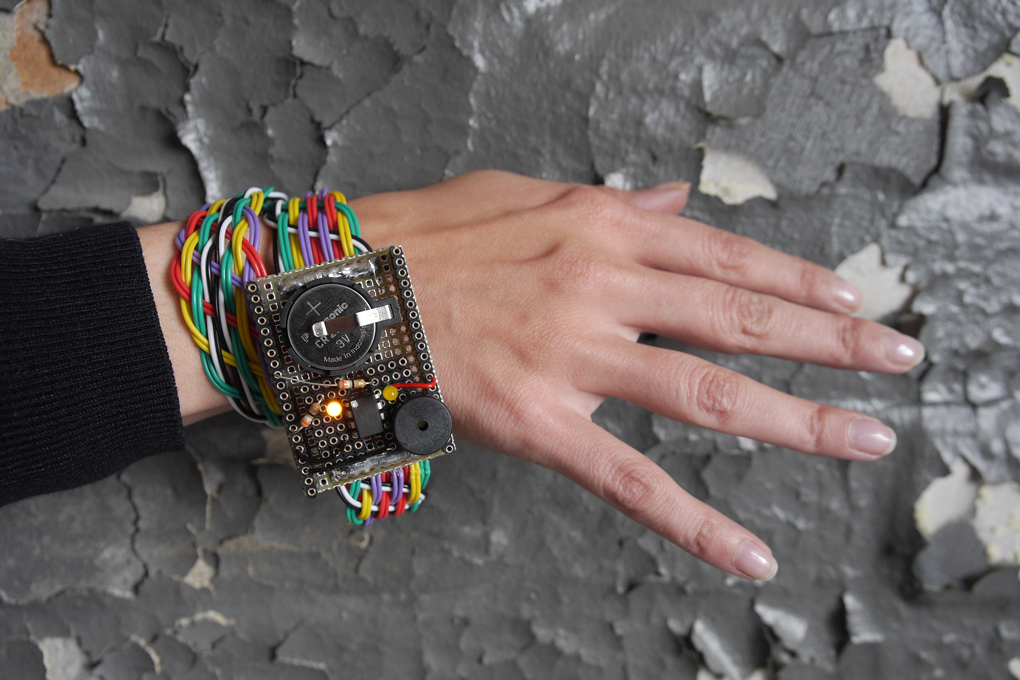
We started by soldering the breadboards on a piece of perfboard. Lots of female pinheaders were used for making the holes on the breadboard and a 3V button cell was also included in order to provide power on the move. After all the detailed soldering it was time to make a wristband (or a belt) for the board using ribbon cable or by weaving wire. Different colour options were available for the wires and cables for a personalized look, and sturdy connectors ensured that the band would stay firmly closed. This was essential, as the band served as both a strap and an on/off switch for the board.
Testing a circuit
Once the breadboard was ready and powered up with the button cell, we tried out constructing an example miniature circuit on the board. The circuit consisted of an ATtiny85 microcontroller, LEDs, resistors, a speaker and jumper wires. The ATtiny was pre-programmed with a code which created random LED blinks and tones with random frequencies, all within random durations. But this was of course just the beginning, as the wearable breadboards are open-ended by nature and provide infinite possibilities for prototyping. Make lights blink, play square waves or create geeky a binary watch which no-one else can understand.
See also:
Thank you!
Thank you to the nice participants who worked hard in order to finish their intricate breadboards and to Niklas Roy for helping out with the workshop. Special thanks also to Conrad Electronic for sponsoring the workshop materials.