

eCrowns
Electronic textiles | 2012
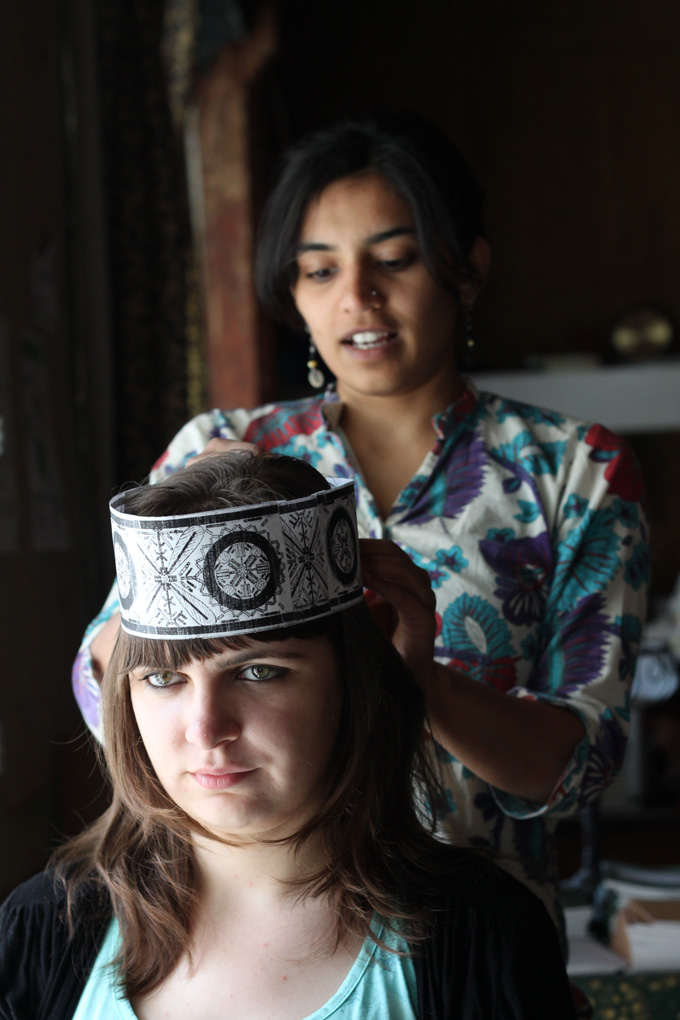
In summer 2012 my friend and colleague Ramyah Gowrishankar and I stayed at a residency at the Interdisciplinary art group SERDE in Aizpute. We explored Latvian crowns (vainags), which are worn by unmarried women as a part of their traditional costumes. With the help of local traditional craft experts, we made two playful eCrowns in which electronic components are embedded in the traditional patterns. The residency was funded by Kulturkontakt Nord.
Making eCrowns
In the beginning of the residency Signe Pucena from SERDE connected us with the traditional textile expert Linda Rubena from Latvia's national culture center (LNKC). We had great time with her learning about the materials and techniques needed for making vainags. We got also detailed instructions for the local crown pattern from the Skrunda region.
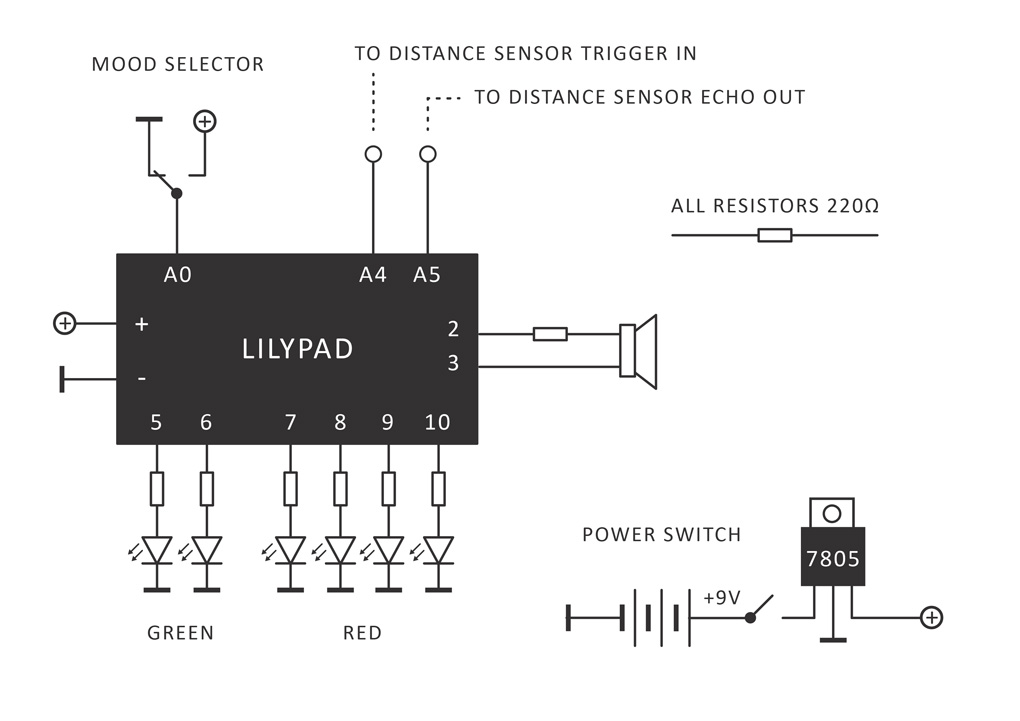
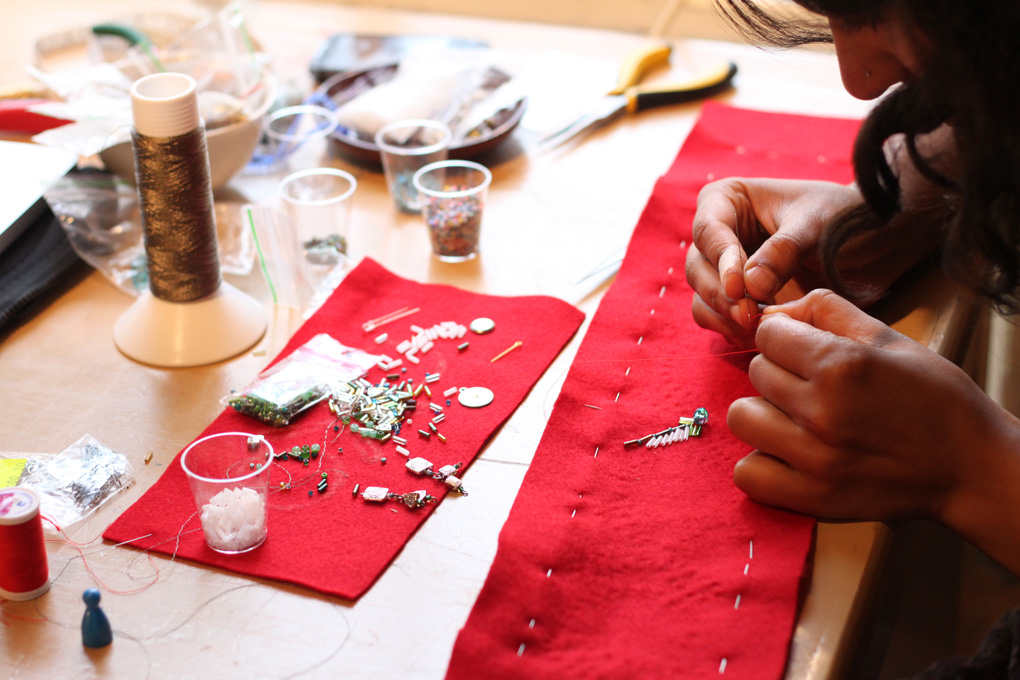
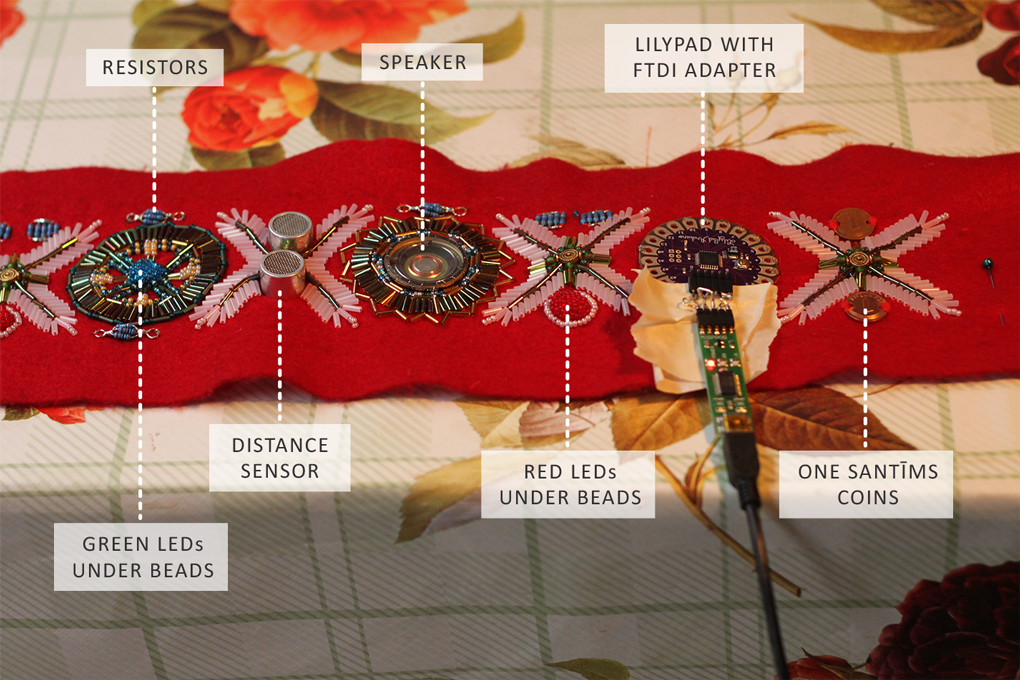
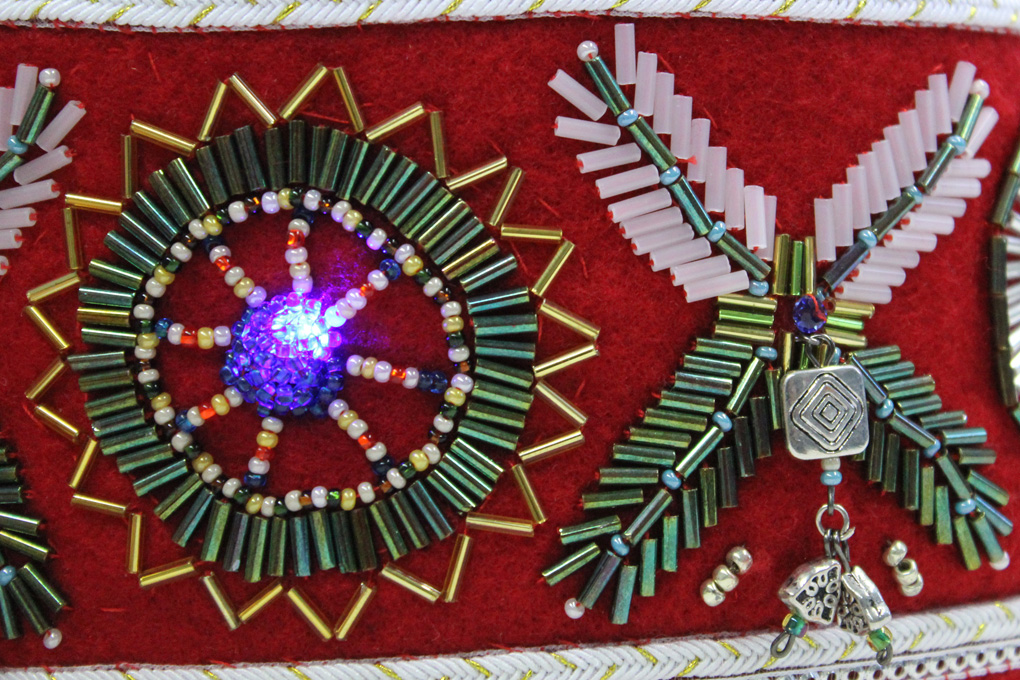
During the first phase we beaded the intricate pattern on a red, woollen fabric. After this we worked on the electronics, which included a sewable microcontroller board called Lilypad, some sensors and basic electronic components. Above you can see the circuit schematic and sewn electronics of the Sirius Crown, which was inspired by discussions at SERDE about local legends. Our aim was to integrate the electronics as seamlessly as possible to the original crown design. While we were working on the crowns, we had nice visits from the neighbours, who bought fresh strawberries and made some e-crafts with us.
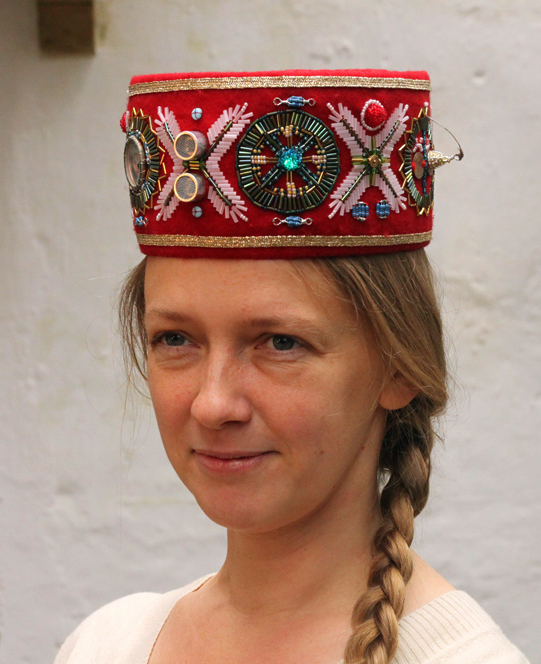
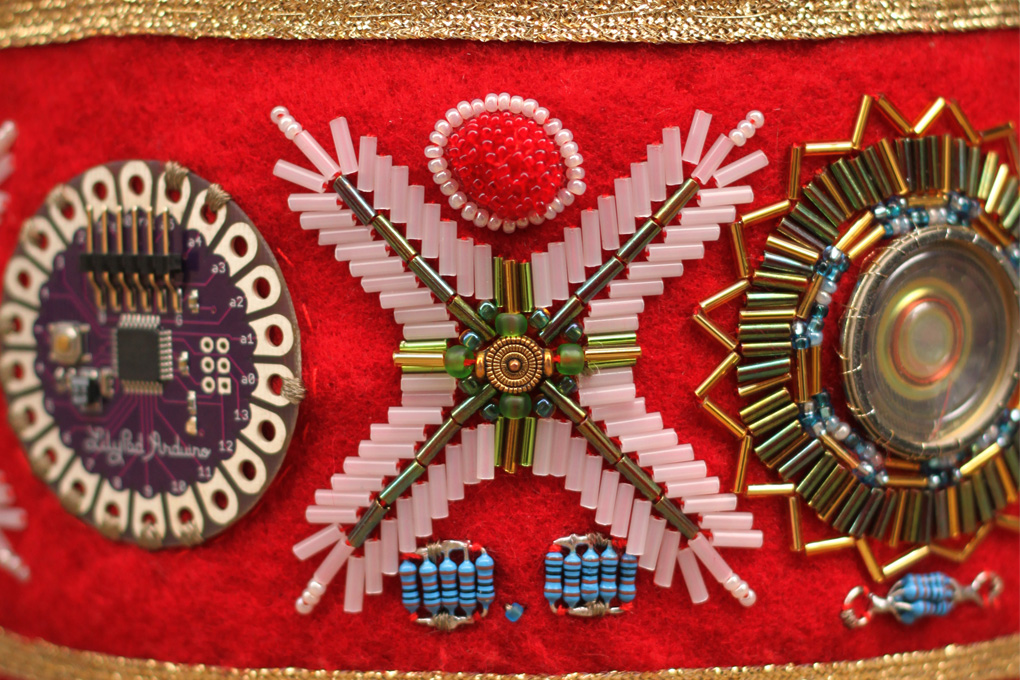
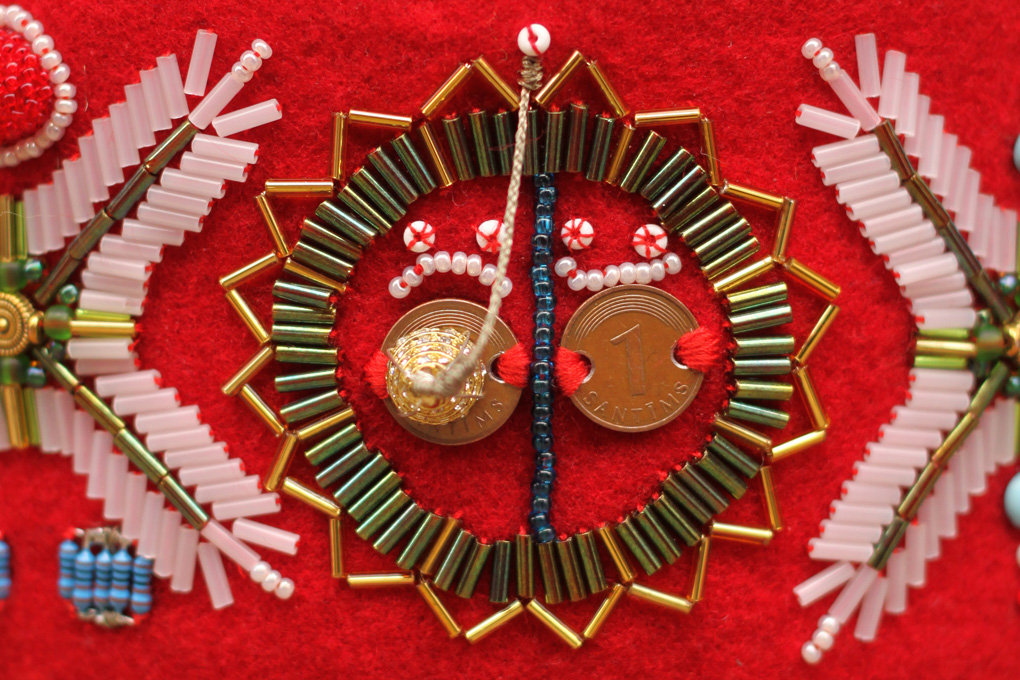
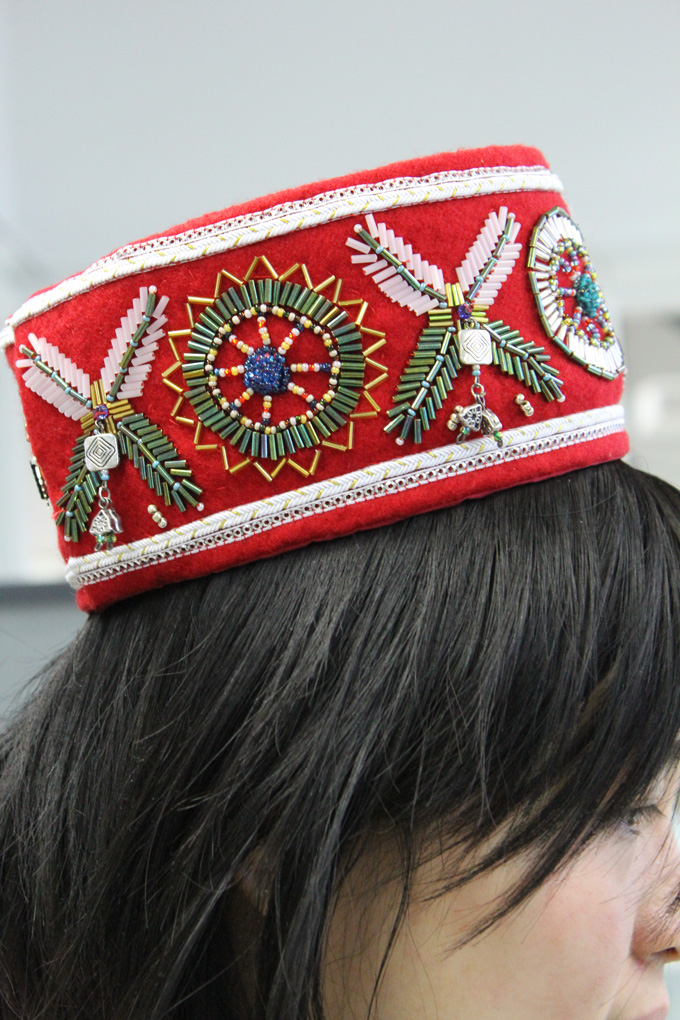
The eCrowns
The Sirius Crown senses potential marital partner candidates with an ultrasonic distance sensor. This triggers friendly or hostile sound and light effects according to the mood selected by the crown's wearer. The other eCrown is called Dancing Crown and it blinks lights with its wearer's movements, inspired by Latvian folk dances, which we also got to see. The lights help in standing better out in the crown.
We got lot of positive feedback for the eCrowns, which have remained many years at SERDE and continue to entertain visitors. They have been also exhibited at the RIXC Media Space in Riga and as a part of the Ars Lieke 2014 electronic arts exhibition at the Kouvola Art Museum Poikilo in Finland. I have had the pleasure to stay at SERDE also later and do projects around weaving belts and building looms out of electro-trash.
See also:
Thank you!
Special thanks to Signe Pucena from SERDE and Linda Rubena from LNKC who supported us in many ways throughout the project. Many thanks also to Niklas who helped out with the programming.