

Magnesia
Interactive installation | 2015
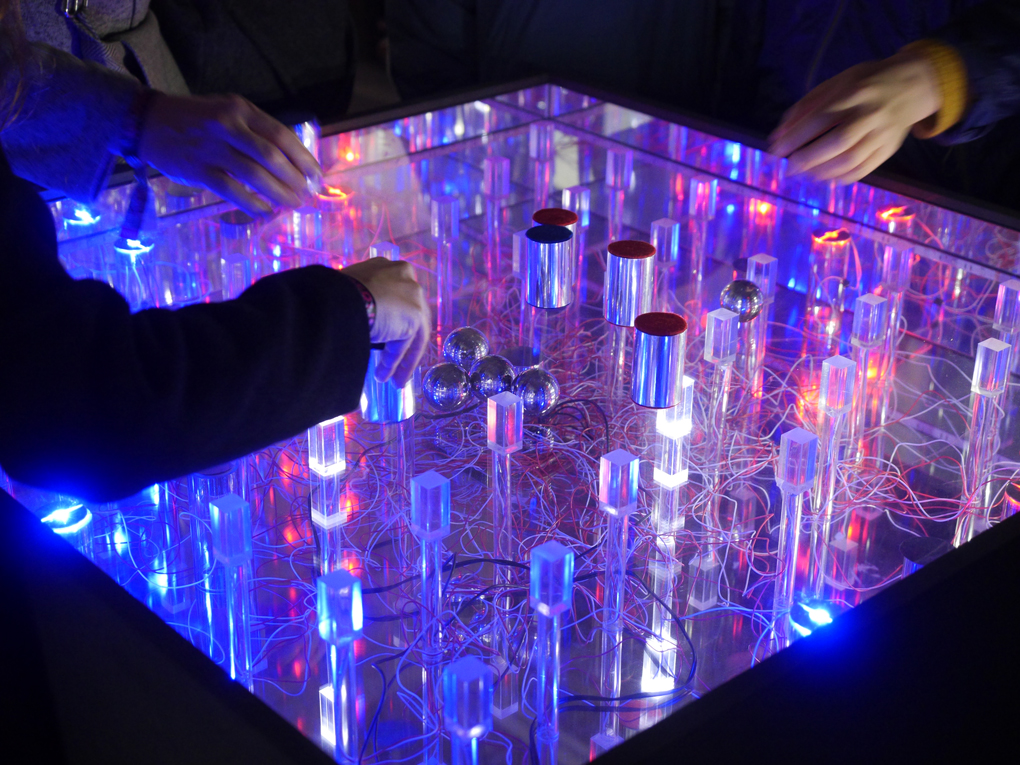
In spring 2015 I took part together with Karina Smigla-Bobinski and Tatiana Vilela in a residency project, which was organized as a part of The Brain – Open Lab. The project was initiated by the Polish Institute Berlin and the Institut Français Germany in partnership with the game and playful media festival A MAZE. We were one of the two teams whose task was to come up with an interactive installation for the A MAZE festival. The result of our residency was Magnesia, a game that works with magnets and light.
Gameplay
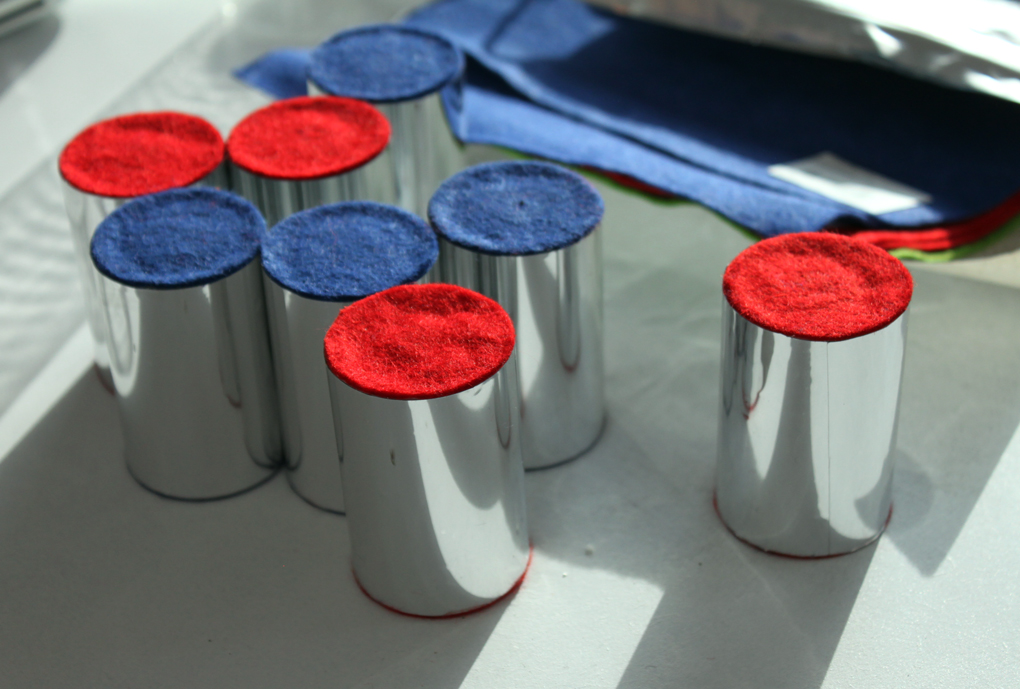
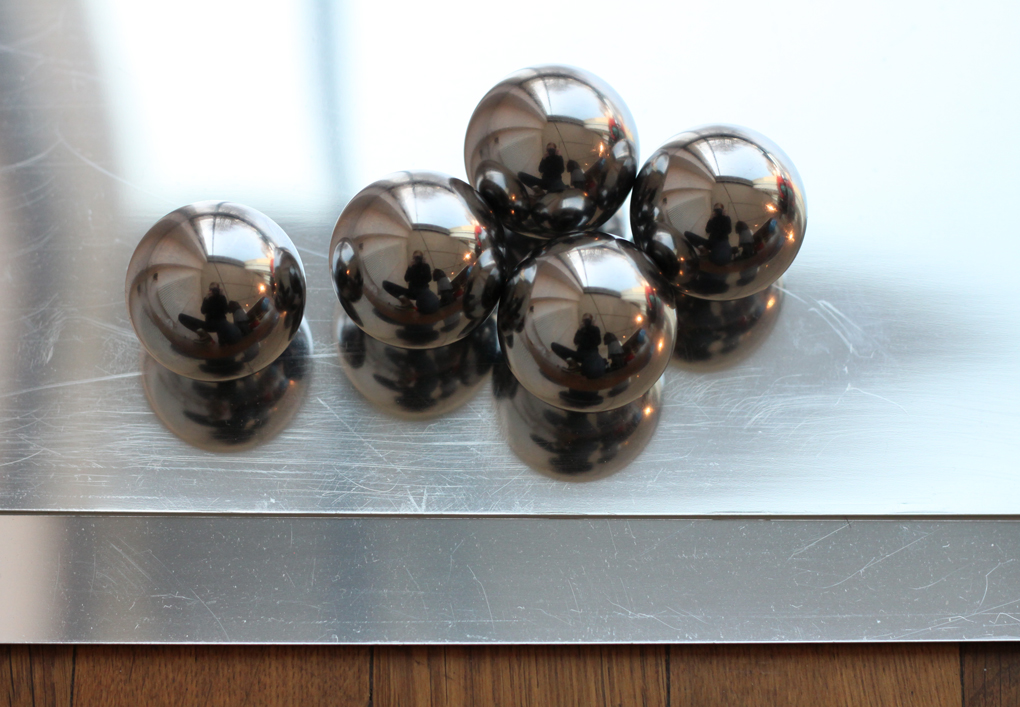
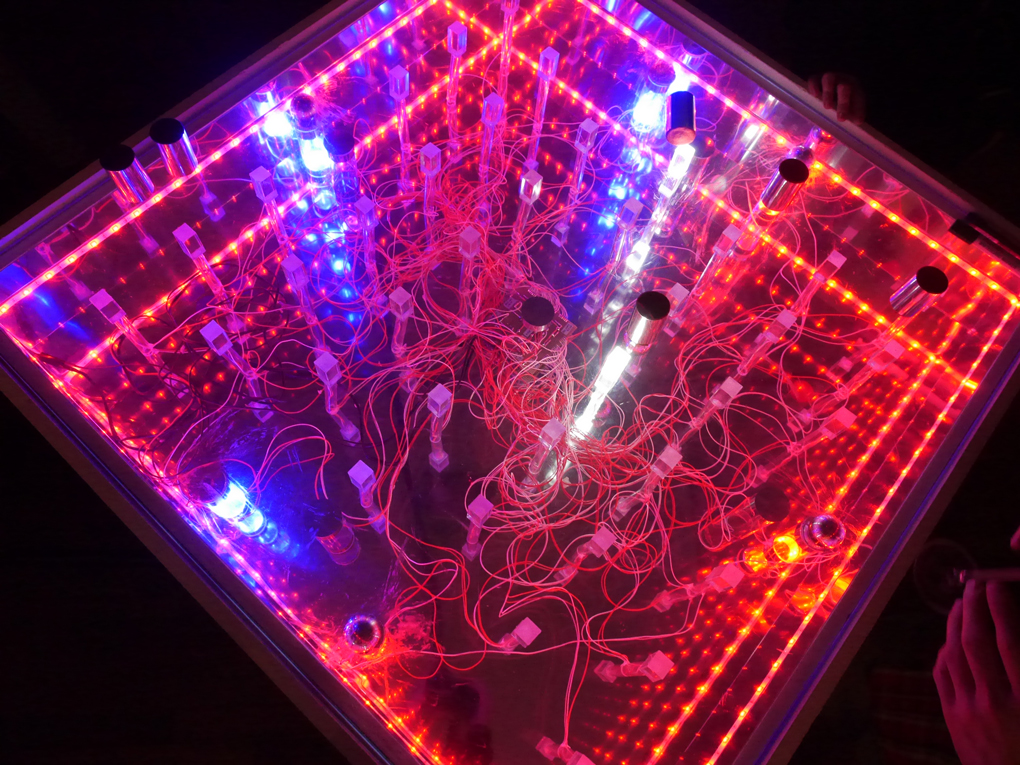
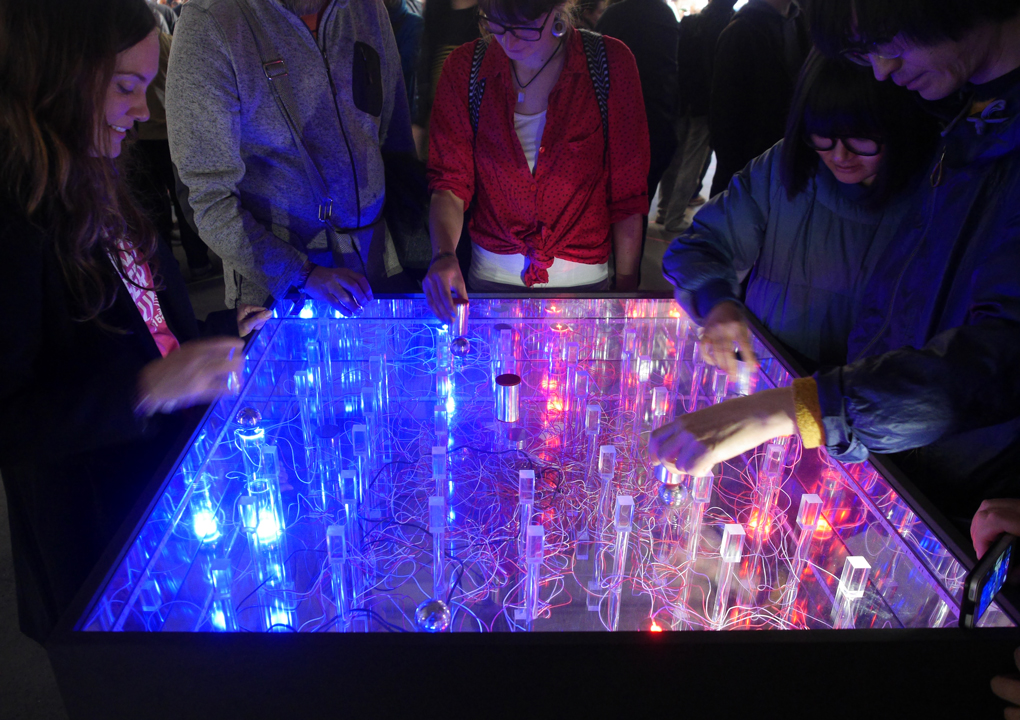
During our exploration of different materials, we got obsessed with magnets and came up with an installation called Magnesia, which is essentially a two-team game. The aim is to move steel balls with a magnetic controller over disc-shaped goals on the sides of the playfield. As half of the goals are color-coded in red and half in blue, the game can be played in red and blue teams. When one team manages to position a ball in all of their goals, winning light effects occur.
Materials
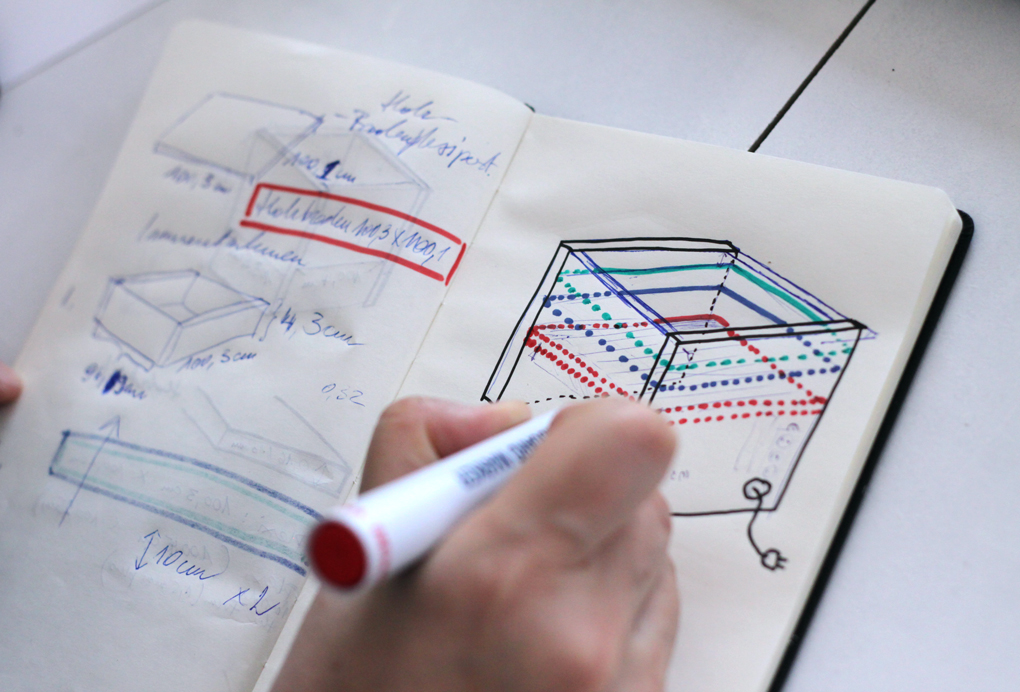
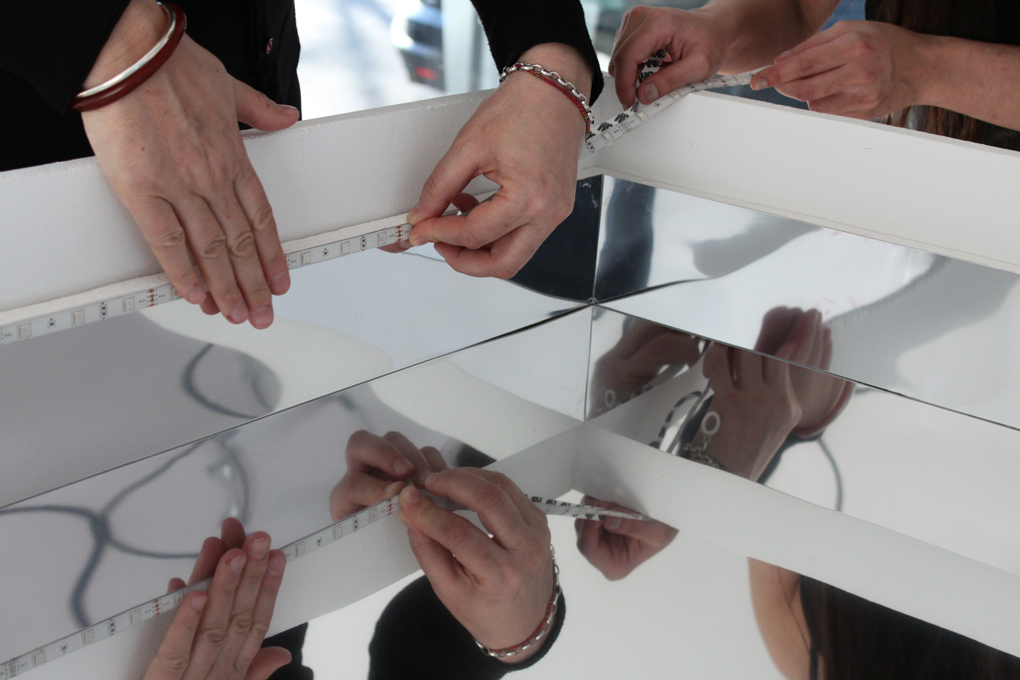
The installation was built in a large box covered with a transparent acrylic glass surface, under which the playfield resides. All the electronics for the light effects reside under a further acrylic glass layer, below the playfield. When one looks inside the box, the multilayered structure and mirror-coated walls create a visually complex infinity view akin to a metaphorical brain.
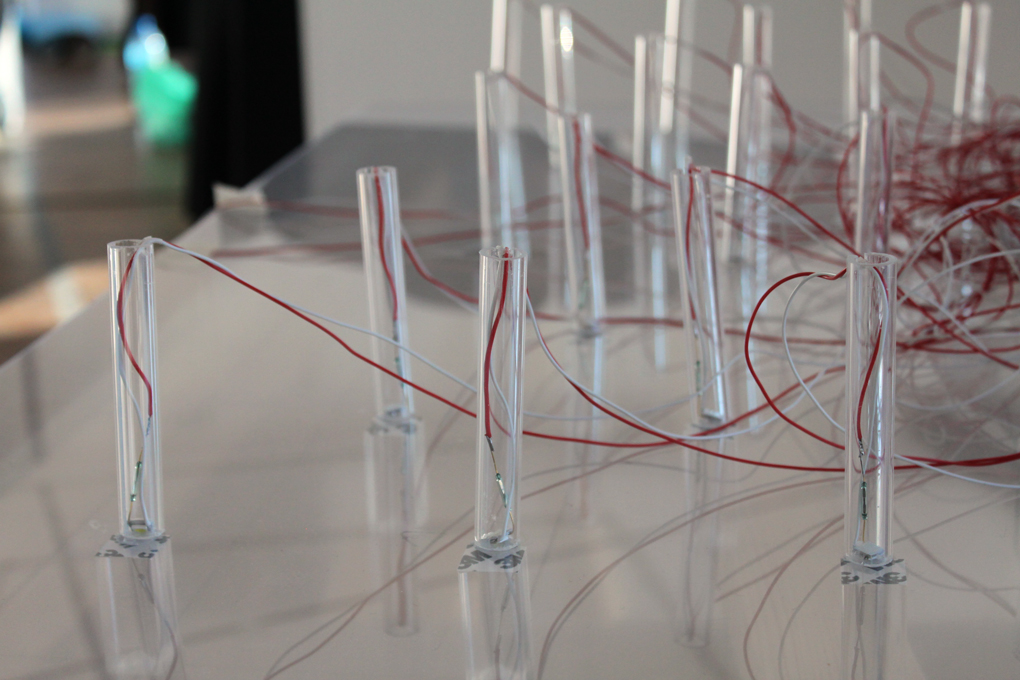
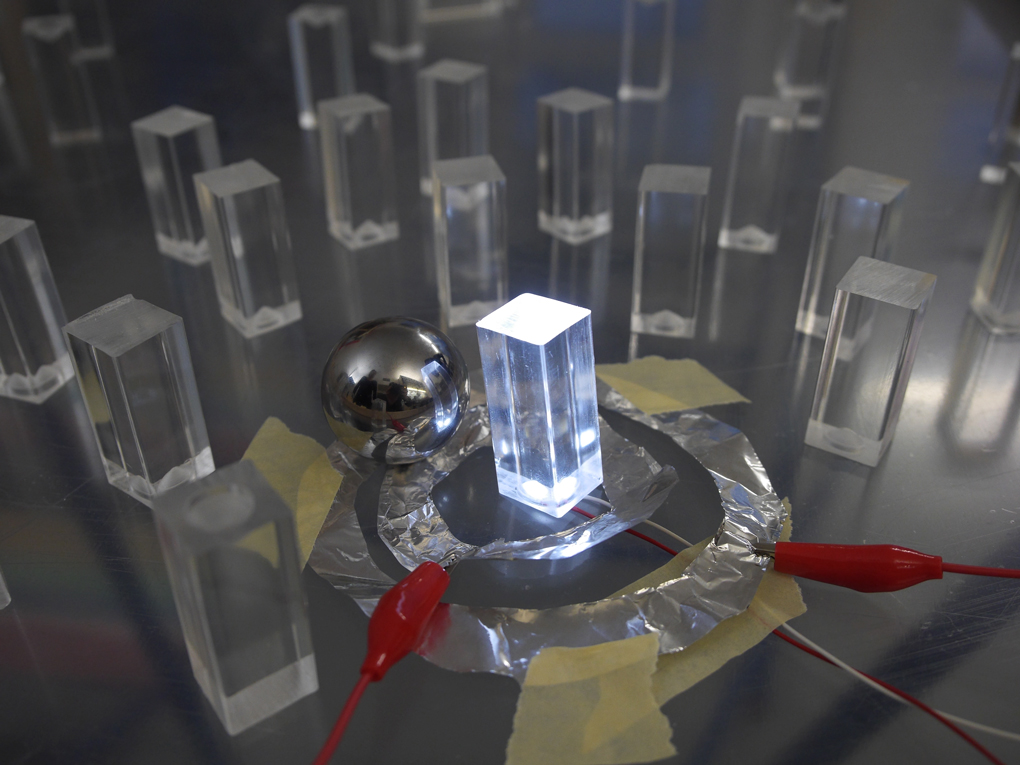
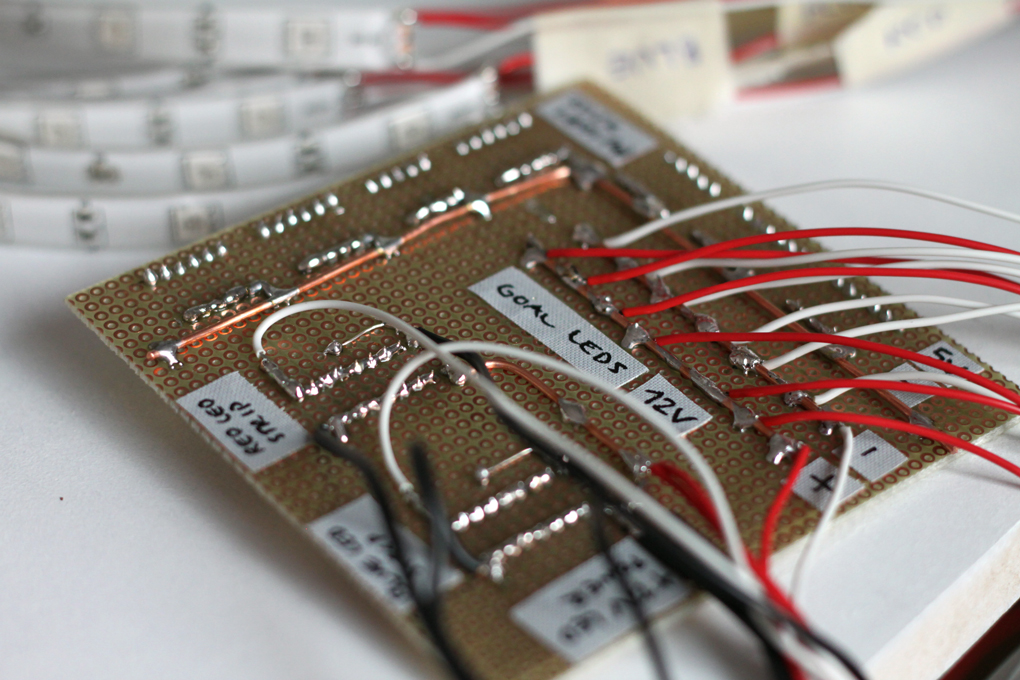
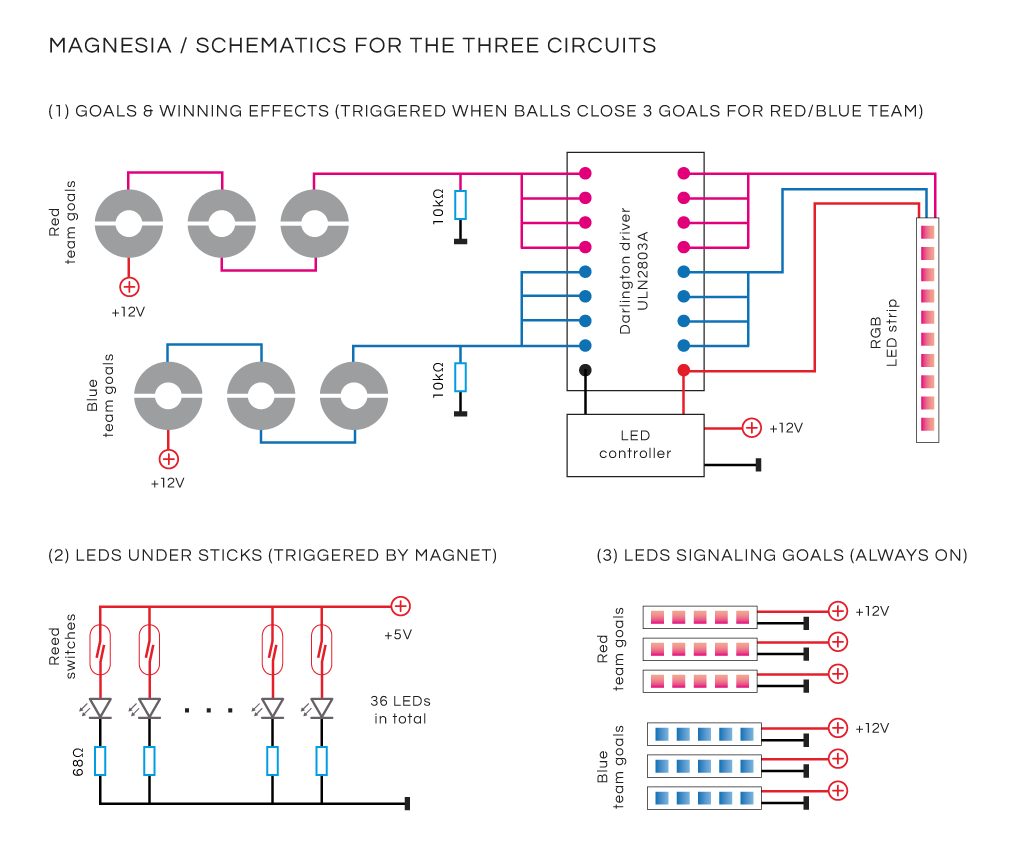
The dynamic light effects of the installation emerge from two separate circuits. The first effect takes place when a player moves a steel ball with the magnetic controller across the playfield. Below the ball, transparent acrylic sticks light up and turn off as the ball moves further. This effect is based on reed switches, which close in the presence of a magnetic field, thus lighting up LEDs. The second effect occurs when one team manages to get a steel ball on each of their three goals. The whole space inside the box starts to blink in the color of the team (red or blue). This winning effect is due to the goals acting as switches that are connected in series. When a metal ball is on one goal, it connects two halves of an aluminum disc and closes part of the circuit. Balls on all of the three goals complete the circuit.
Presenting Magnesia
At the end of our residency we presented a prototype of Magnesia at the Polish Institute. Some weeks later, the final version was available for a bigger audience at the A MAZE festival. For this version, Stephan Bosse and his colleagues built a new, sturdy black MDF box for the installation. After the festival, Magnesia was available for playing for some years at the former Game Science Center in Berlin.
See also:
Thank you!
Many thanks to my teammates Karina and Tatiana and for Stephan and his colleagues for the nice collaboration. Thank you also to Thorsten Wiedemann and the Polish and French cultural institutes for inviting me to the project. Lastly, special thanks to Mikołaj Tarnowski for his great help during the residency without which it would have been impossible to get the installation prototype finished on time.