Synthesizer workshop
Workshop
Junior Lab, Berlin / 2016
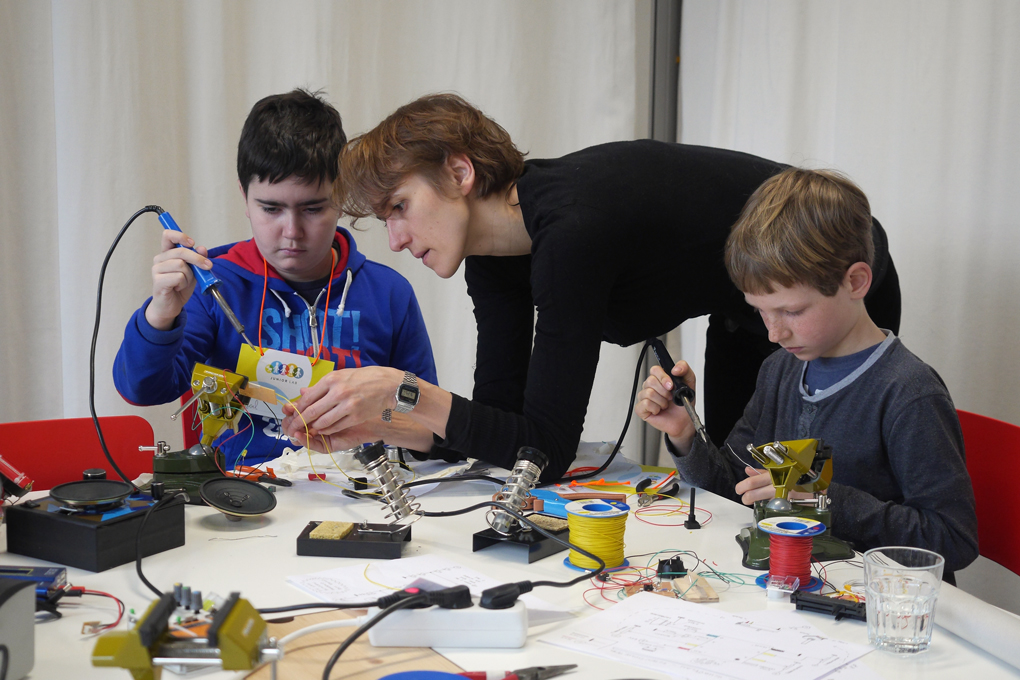
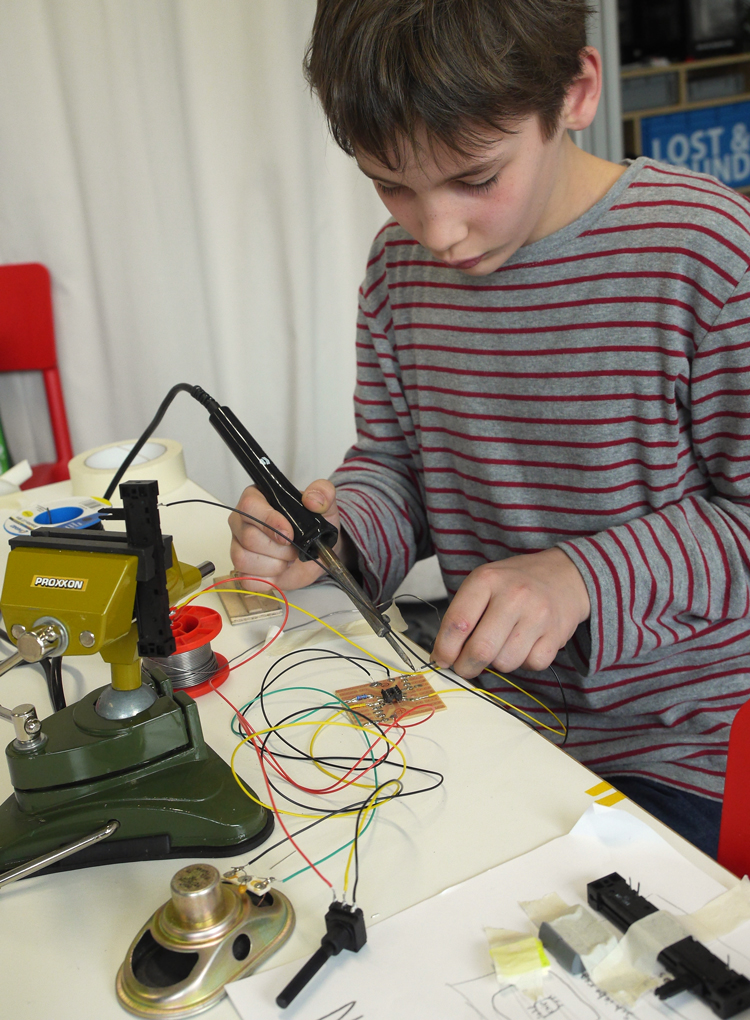
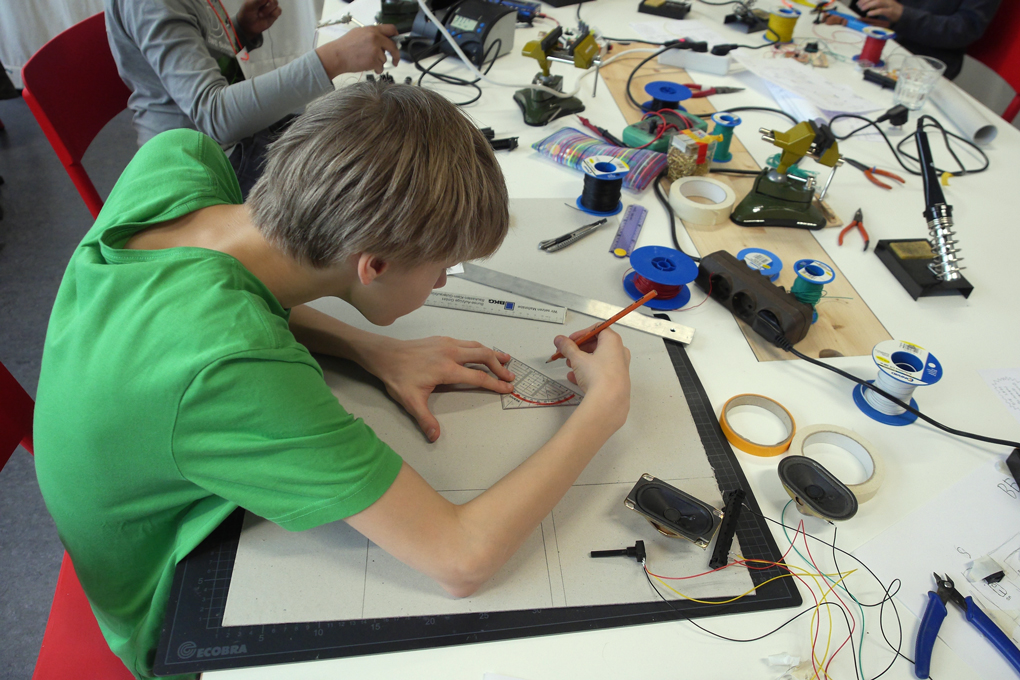
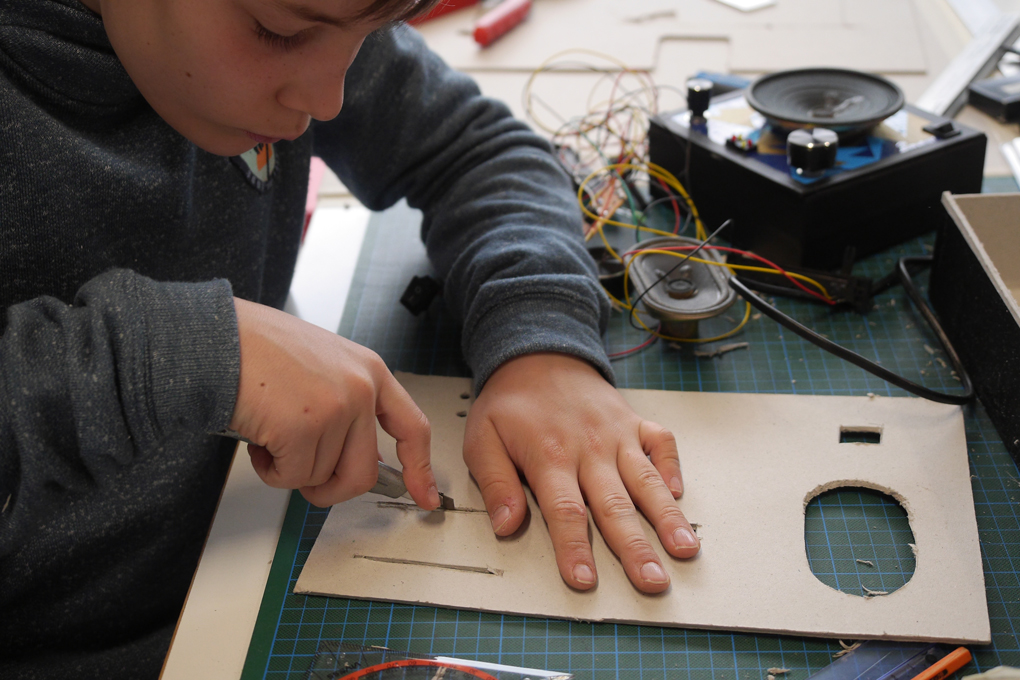
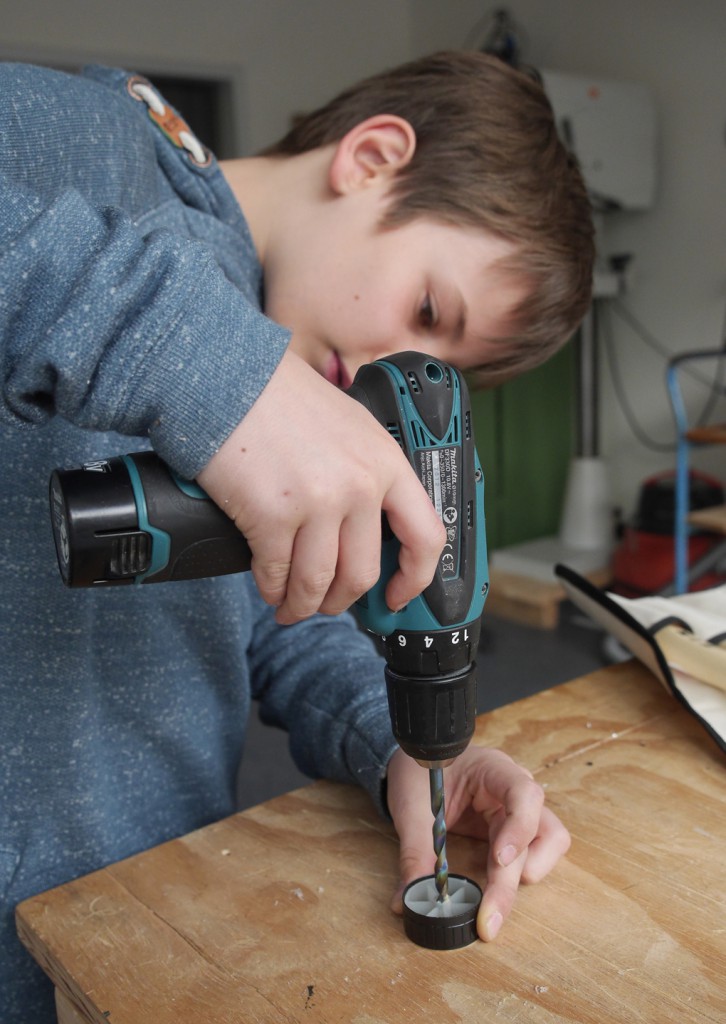
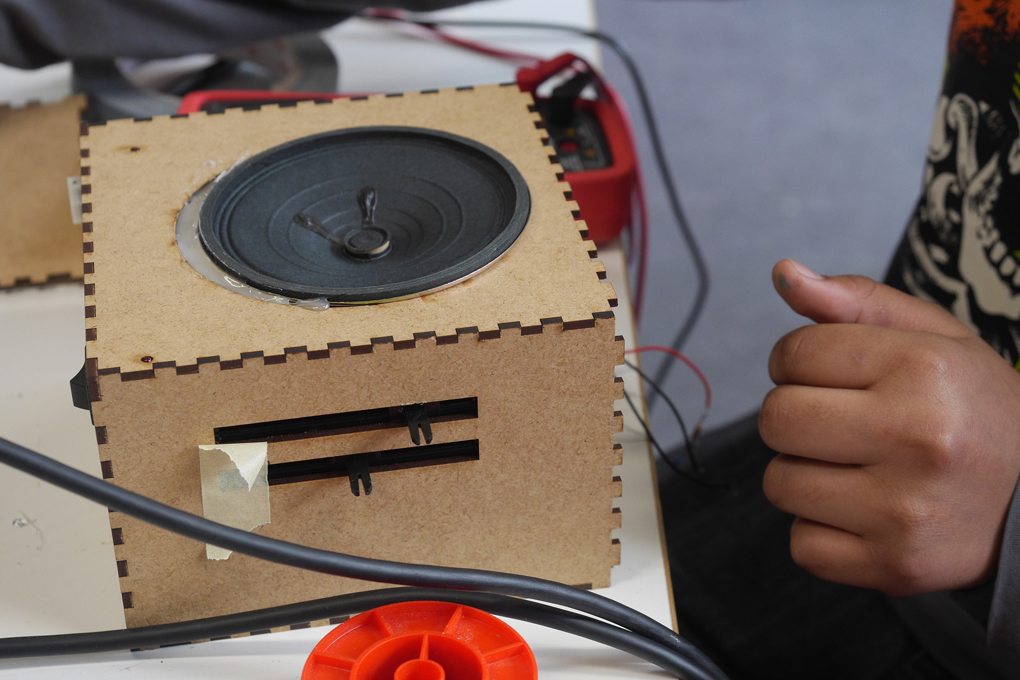
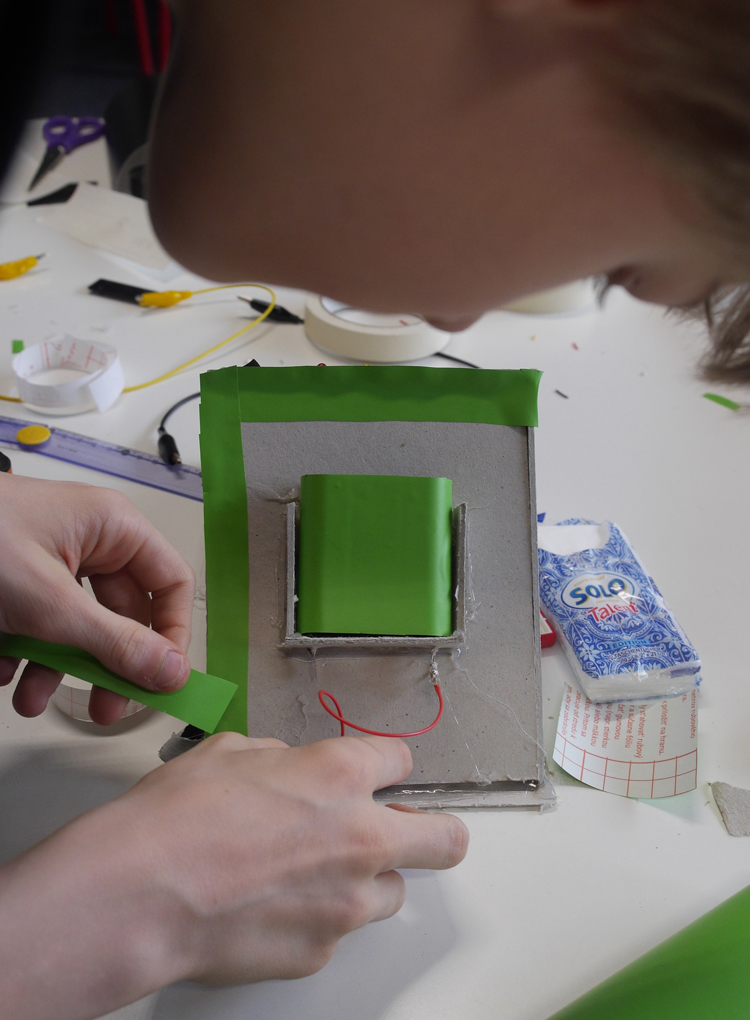
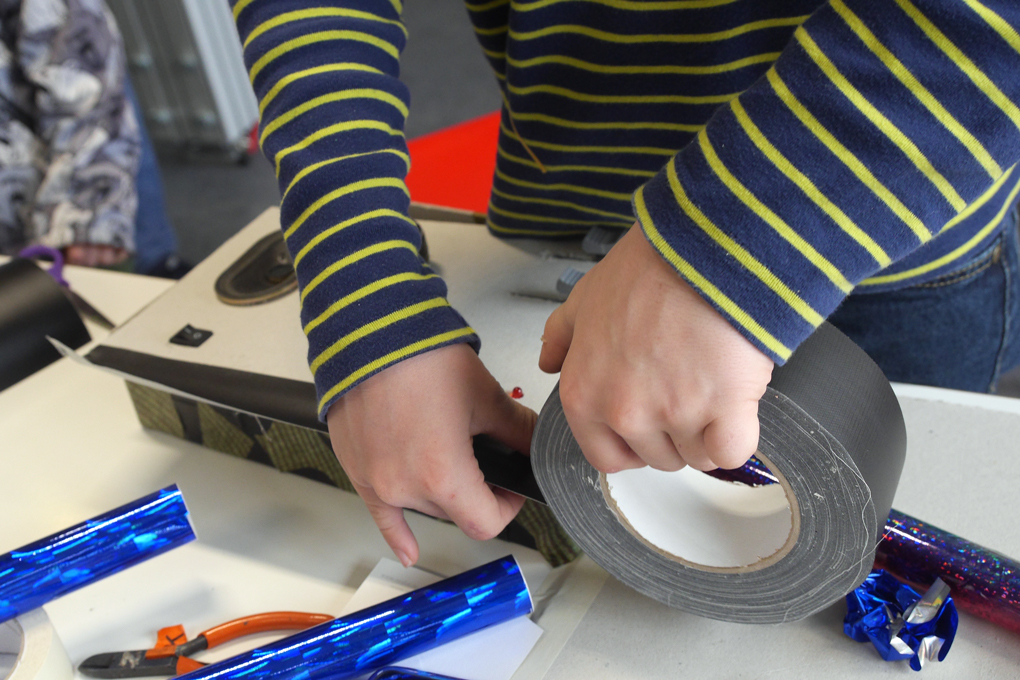
The Synthesizer workshop was organized as a part of Junior Lab’s Easter edition 2016 at FabLab Berlin. I have given earlier LED patch workshops at Junior Lab, but this time we wanted to try out “Pro workshops”, where kids can work on a longer project. Since Berlin is undoubtedly a city of electronic music lovers, I thought it would be cool if the kids can build their own synthesizers.
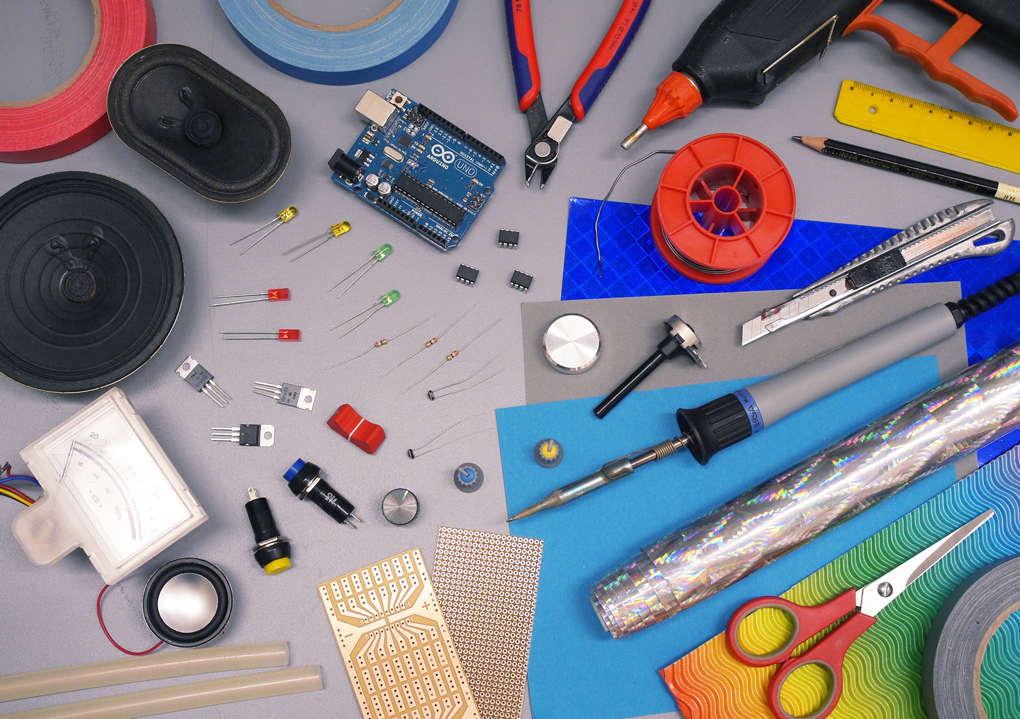
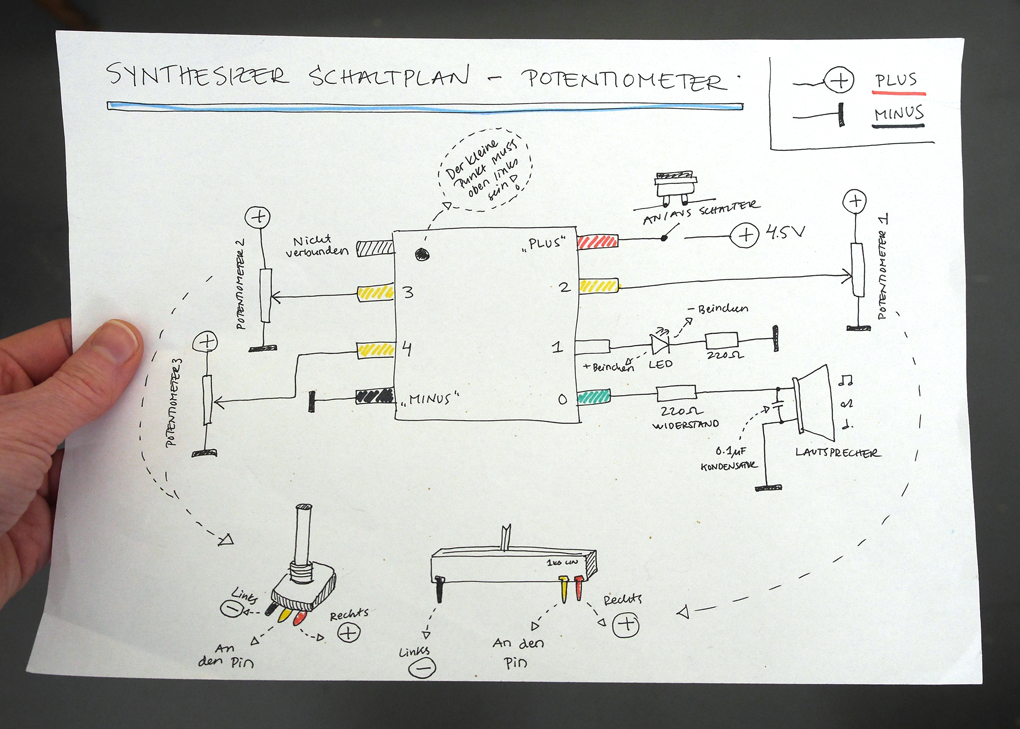
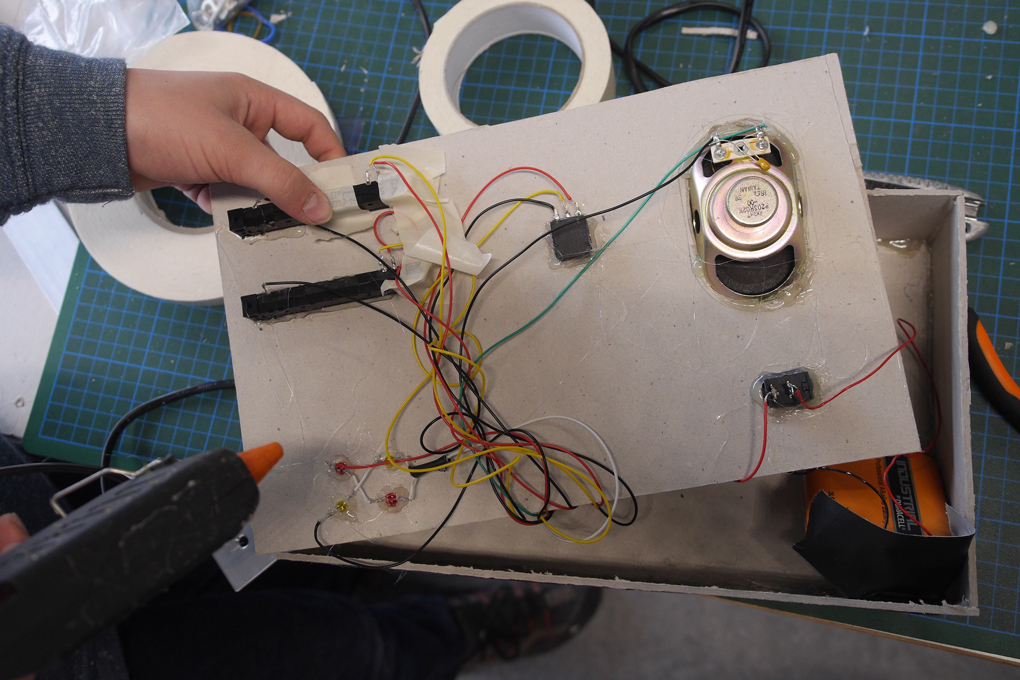
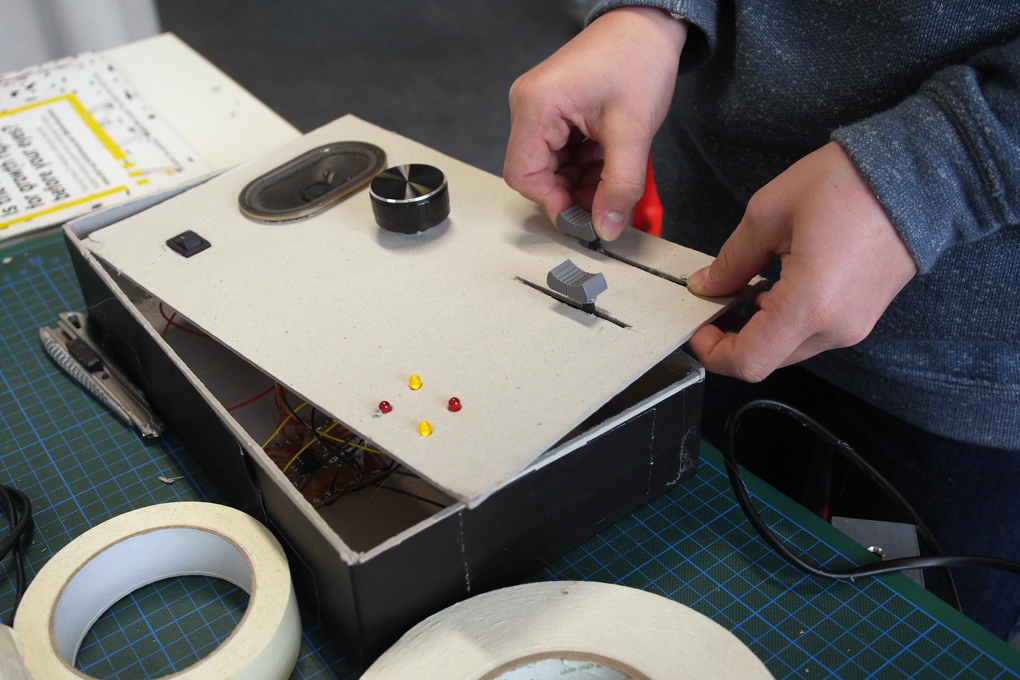
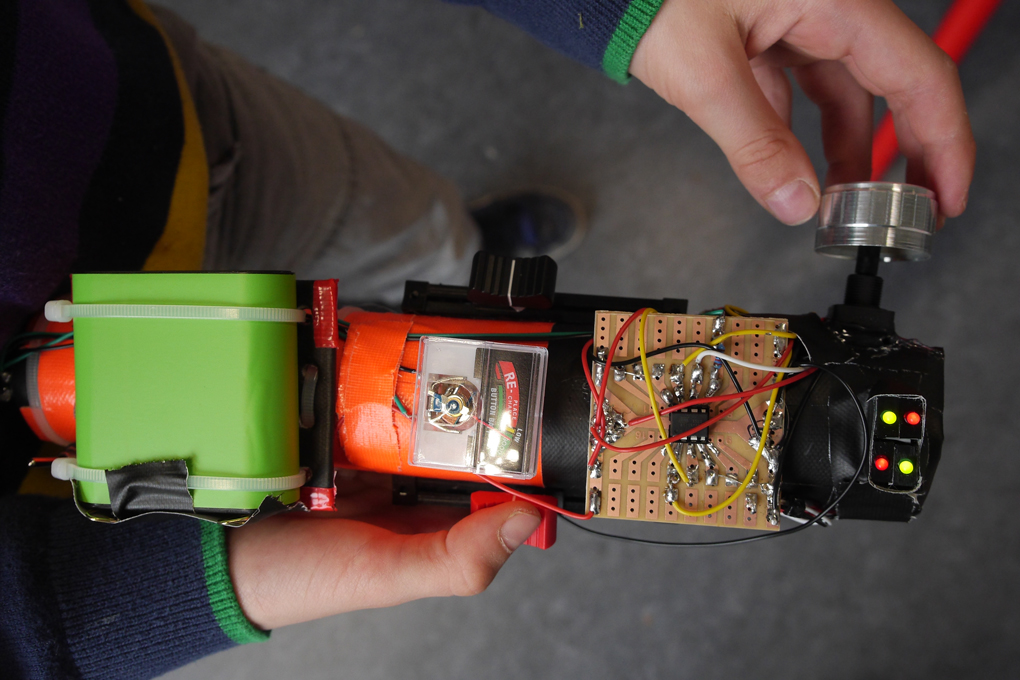
We started the workshop by looking into the possibilities of producing sounds using a microcontroller. We explored how sound pitch and other properties can be changed using input from a potentiometer or a photoresistor. For the actual synthesizers, a pre-programmed ATtiny85 microcontroller was provided with the idea that one could connect 1-3 potentiometers or photoresistors to its analog inputs for controlling different sound effects. One of the inputs influenced pitch, the second one produced a low-frequency modulation and the third one created a “staccato” effect.
The Synthesizer workshop was organized as a part of Junior Lab’s Easter edition 2016 at FabLab Berlin. I have given earlier LED patch workshops at Junior Lab, but this time we wanted to try out “Pro workshops”, where kids can work on a longer project. Since Berlin is undoubtedly a city of electronic music lovers, I thought it would be cool if the kids can build their own synthesizers.
We started the workshop by looking into the possibilities of producing sounds using a microcontroller. We explored how sound pitch and other properties can be changed using input from a potentiometer or a photoresistor. For the actual synthesizers, a pre-programmed ATtiny85 microcontroller was provided with the idea that one could connect 1-3 potentiometers or photoresistors to its analog inputs for controlling different sound effects. One of the inputs influenced pitch, the second one produced a low-frequency modulation and the third one created a “staccato” effect.